Introduction to Paint Estimation
You are standing in the paint aisle staring at endless rows of color swatches, wondering how many cans to load into your cart. Grab too few and you risk a mismatched second batch; buy too many and you waste money on product you cannot return. So, how many gallons of paint do you actually need for your project?
As a general planning rule, one gallon of standard latex interior paint covers approximately 350 to 400 square feet with a single coat. For a standard 10×12-foot room with eight-foot ceilings, you will typically need about 2 gallons of paint to apply two full coats. Total material requirements depend on wall texture, surface porosity, the color change you are making, and whether you are painting trim or ceilings.
Calculating exact paint quantities requires moving past guesswork and measuring your space accurately. This guide walks you through the standard formulas, surface area adjustments, waste factors, and specific room measurements so you can buy the right amount every time you tackle a painting project.
Understanding Paint Coverage Rates
Before calculating your total wall area, you need to understand how far a single gallon of paint actually stretches. Standard acrylic latex paint applied over smooth drywall yields a predictable square footage yield under normal indoor temperature and humidity conditions.
Manufacturer specifications almost universally list coverage at 350 to 400 square feet per gallon for the first coat on primed drywall. However, experienced painters and contractors rarely budget using the maximum 400-square-foot figure. They plan closer to 350 square feet per gallon to account for roller absorption, minor spills, and touch-ups.
Textured walls consume significantly more paint than smooth surfaces. Heavy knockdown, orange peel, popcorn, or brick surfaces increase the physical surface area far beyond the flat floorprint footprint. Porous surfaces like unprimed drywall, bare wood, or stucco also drink up the initial coat, requiring either a dedicated primer or an extra layer of paint.
The Core Paint Calculation Formula

Determining your paint needs relies on calculating the total square footage of the surfaces you plan to paint and dividing by the standard coverage rate. This math is straightforward once you break your room down into manageable geometric shapes.
Start by measuring the perimeter of the room in linear feet using a tape measure. Multiply that perimeter by the ceiling height to get the gross wall area. For example, a room that measures 12 feet by 15 feet has a perimeter of 54 feet (12 + 12 + 15 + 15 = 54). Multiply 54 feet by an 8-foot ceiling height to get 432 gross square feet of wall space.
Next, subtract the square footage of all doors and windows. A standard interior door measures roughly 21 square feet (3 feet by 7 feet), and a standard window averages about 15 square feet. Subtracting two doors and three windows (about 87 square feet total) leaves you with 345 net square feet of paintable wall surface.
Because quality paint jobs require two coats for proper color depth and durability, multiply your net square footage by two. Taking 345 square feet times two gives you 690 total square feet to cover. Divide 690 by 350 square feet per gallon, and you arrive at approximately 1.97 gallons—meaning you need to purchase two full gallons.
Paint Estimation by Room Size

Room layouts vary widely, but standard residential sizes offer reliable baselines for material planning. You can use our Paint Calculator for a preliminary planning estimate, or reference the standard breakdown below to gauge your requirements before heading to the home center.
Try Our Free Calculators:
| Room Type & Dimensions | Approximate Wall Area | Paint Needed (2 Coats) |
|---|---|---|
| Small Bedroom (10′ x 10′) | 320 sq. ft. | 2 Gallons |
| Average Bedroom (12′ x 14′) | 416 sq. ft. | 2 to 3 Gallons |
| Large Master Bedroom (16′ x 20′) | 576 sq. ft. | 3 to 4 Gallons |
| Standard Living Room (15′ x 20′) | 560 sq. ft. | 3 Gallons |
| Hallway & Stairwell | 250 sq. ft. | 2 Gallons |
| Small Half Bathroom (5′ x 8′) | 208 sq. ft. | 1 to 2 Gallons |
These estimates assume standard eight-foot ceilings with minimal architectural cut-ins. If your home features vaulted ceilings, arched entryways, or deep window bays, your actual surface area will increase noticeably.
Accounting for Ceilings and Trim

Homeowners frequently focus entirely on walls while forgetting that ceilings and millwork also require dedicated paint purchases. Treating these surfaces as an afterthought often leads to an unexpected mid-project trip back to the store.
Ceilings are usually painted with flat white ceiling paint designed to minimize glare and hide surface imperfections. To calculate ceiling paint, multiply the room length by the room width. A 12×14-foot ceiling equals 168 square feet. Since ceilings rarely experience heavy wear, one coat is often sufficient on previously painted surfaces, meaning a single quart or small gallon can covers most standard rooms.
Trim, baseboards, crown molding, and doors require specialized semi-gloss or high-gloss enamel paints. While calculating exact linear footage for trim can be tedious, a standard rule of thumb is to buy one quart of trim paint for every medium-sized room, or one gallon for a larger floor level. One gallon of trim paint typically covers about 350 to 400 square feet of linear molding and doors.
Impact of Surface Texture and Porosity

The physical condition of your substrate is one of the most critical variables in paint estimation. Applying paint over different textures changes your coverage rate drastically.
Smooth drywall represents the baseline where you achieve the standard 350 to 400 square feet per gallon. Lightly textured orange peel walls reduce coverage by about 10 to 15 percent because the peaks and valleys capture extra droplets from your roller sleeve.
Heavy textures like popcorn ceilings or knock-down stucco can reduce paint coverage by 25 to 40 percent. If you are painting unpainted brick, concrete block, or rough cedar siding, expect coverage to drop as low as 150 to 200 square feet per gallon on the first coat due to extreme absorption.
Using a high-quality primer on porous or bare surfaces seals the substrate and ensures your topcoats achieve their rated coverage. Neglecting primer on bare drywall or repaired patches means the drywall paper will soak up your expensive paint, forcing you to buy extra gallons.
Color Changes and Coat Counts
The color you are transitioning from and the color you are applying dictates whether two coats will suffice or if you will need reinforcements.
Painting a light neutral color over an existing light neutral is the most straightforward scenario. Two coats provide complete, even coverage with standard paint formulations.
Covering a dark wall color (like navy blue, forest green, or charcoal gray) with a crisp white or pale pastel requires significantly more hiding power. Dark pigments are notoriously difficult to mask. Without a tinted primer, you may need three or even four coats of standard paint to prevent the dark undertone from ghosting through.
Also Read:
Bright, saturated accent colors—particularly true reds, oranges, and deep yellows—have notoriously low hiding capability. Many manufacturers specify specialized tinted primers or recommend specific base coats to achieve true color depth without requiring four coats of paint.
How to Measure Complex Rooms and Open Spaces
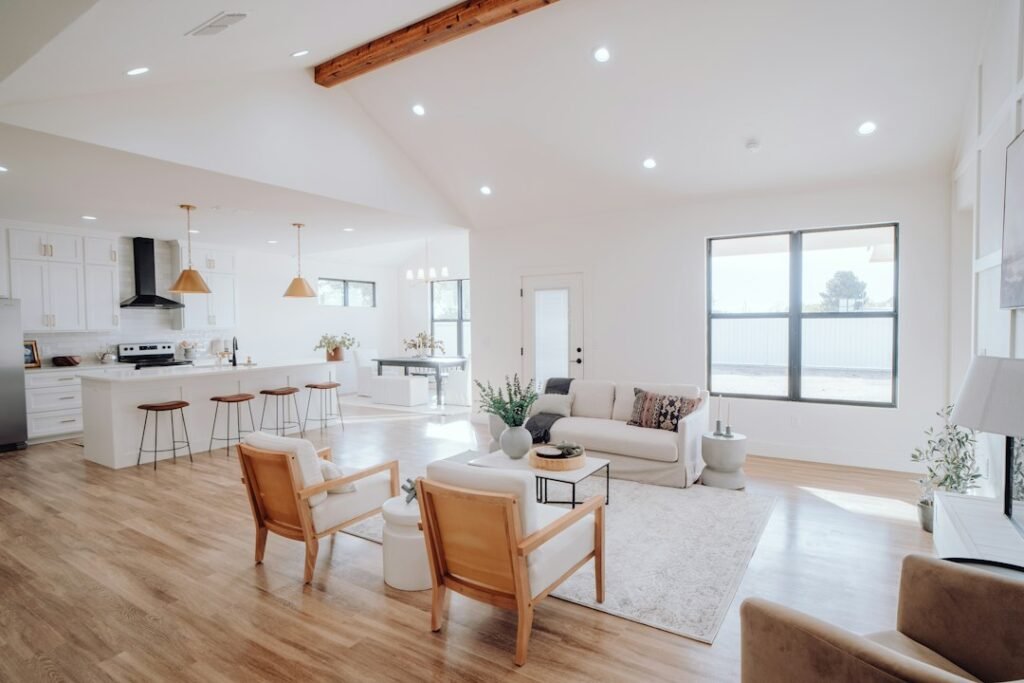
Modern open-concept floor plans and vaulted spaces complicate traditional rectangular measurements. When walls connect without natural dividing corners, you must measure the entire continuous perimeter.
For rooms with vaulted or cathedral ceilings, break the wall space down into geometric shapes. Measure the rectangular portion of the wall up to the baseline of the gable, then calculate the triangle above it by multiplying the width of the wall by its peak height, then dividing by two.
Stairwells present another measurement challenge due to angled floor lines and high-reach walls. Measure the horizontal run of the stairway and estimate the average ceiling height from the slope of the stairs to the ceiling peak. Always add an extra 15 percent safety margin when calculating stairwells and vaulted spaces to account for the physical difficulty of rolling high areas and managing extra roller splatter.
Paint Container Sizes and Purchasing Strategy

Paint manufacturers package coatings in specific container sizes: quarts, gallons, and five-gallon buckets. Knowing when to upgrade your container size prevents unnecessary spending.
Quarts cover approximately 75 to 100 square feet with one coat. They are ideal for trim, accent walls, doors, or touch-up work. Buying multiple quarts for a whole room quickly becomes far more expensive than purchasing a single gallon.
Gallons are the industry standard for residential projects. If your math indicates you need 2.2 gallons of paint, you must purchase three individual gallons. Unopened paint cans can often be returned, but running out with one wall half-finished forces an exact color-match run that risks slight batch-to-batch sheen variations.
Five-gallon buckets are cost-effective for large whole-house projects or single-color open floor plans. Paint purchased in five-gallon sizes usually offers a per-gallon cost savings, but stirring and pouring from heavy buckets requires a grid screen and a dedicated pouring spout.
Common Estimating Mistakes to Avoid
Homeowners frequently make avoidable miscalculations that lead to project delays or wasted materials. Being aware of these pitfalls keeps your budget intact.
- Forgetting to subtract doors and windows. Failing to remove openings from your gross square footage calculation results in buying 10 to 15 percent more paint than necessary.
- Ignoring the second coat. Assuming that one coat of paint is enough leaves you with patchy walls, visible roller marks, and poor color saturation. Always multiply your net square footage by two.
- Skipping primer on bare patches. Slap-painting bare drywall patches without primer leads to uneven sheen absorption and forces you to use extra paint coats to fix flashing.
- Buying exact mathematical amounts. Purchasing precisely 2.0 gallons for a project calculated at 1.9 gallons leaves zero room for error, spills, or roller saturation. Always round up.
- Mixing paint batches improperly. If you buy multiple gallons of tinted paint, box them together in a larger five-gallon bucket to ensure absolute color consistency across all walls.
How to Lower Your Paint Project Costs
Painting is one of the most cost-effective DIY home improvements, but material costs add up quickly when working with premium coatings. You can manage your budget effectively without sacrificing finish quality.
- Buy standard finishes for low-impact rooms. Reserve expensive scrubbable luxury paints for kitchens and bathrooms, using economical flat or eggshell formulations for low-traffic guest bedrooms.
- Calculate accurately before shopping. Measure your walls meticulously using a Paint Calculator to avoid over-purchasing expensive specialty primers and topcoats.
- Look for manufacturer rebates. Major paint brands run seasonal weekend rebate programs and holiday promotions offering significant per-gallon mail-in savings.
- Reuse leftover paint for touch-ups. Store leftover paint in airtight containers with labeled lids so you can handle minor scuffs years later without buying fresh product.
How to Get an Accurate Paint Estimate
Securing an accurate paint quantity estimate requires methodical preparation before you step foot in a hardware store or hire a professional contractor.
- Measure every wall length and ceiling height using a reliable tape measure or digital laser measure.
- Sketch a basic floor plan on paper, noting the exact dimensions of every door, window, and permanent architectural feature.
- Calculate your gross wall area, subtract openings, and factor in your required number of coats.
- Evaluate your wall texture, substrate condition, and color transition requirements to decide if you need extra volume or specialized primers.
- Consult with paint counter specialists regarding specific spreading rates for the exact brand and sheen you choose.
Advanced Square Footage Adjustments for Complex Trim and Built-Ins
When calculating paint requirements for spaces featuring extensive custom millwork, wainscoting, or built-in bookshelves, standard wall formulas must be adjusted to prevent over-purchasing gallons. Built-in shelving units replace substantial spans of drywall surface area. Measure the exterior dimensions of the shelving unit to determine how much wall space it covers, and subtract that square footage from your gross wall calculation. However, remember that the bookshelves themselves require finishing if you plan to paint them to match the room.
Painting shelves, cabinets, or intricate raised-panel wainscoting requires a shift in how you calculate material needs. Complex woodwork features profiles, edges, and panel insets that increase surface area by 30 to 50 percent compared to a flat wall of the same dimensions. For detailed trim work, always calculate linear footage and apply specialized enamel formulas designed for brush and spray application rather than standard wall rollers.
Practical Guidelines for Calculating Accent Walls
Accent walls are a popular design choice, allowing homeowners to inject bold color into a room without overwhelming the space. Estimating paint for a single accent wall is simple, but requires careful adherence to container sizing rules. If you are painting just one accent wall in a 12×14-foot room, your total accent wall area typically spans about 96 to 120 square feet depending on ceiling height.
Even though 120 square feet easily falls within the coverage limits of a single quart of paint, experienced painters often recommend purchasing a full gallon anyway. Because two full coats are mandatory—especially when applying dark or vibrant accent colors over lighter neutral primers—a single quart will leave you dangerously close to running out mid-project. Furthermore, having leftover paint from the exact batch ensures you can perform seamless touch-ups down the road.
Estimating Primer Quantities Separately
Many DIYers make the mistake of assuming their paint calculations automatically cover primer requirements. Primer is a completely separate product with its own coverage rates, and purchasing the right amount is vital for achieving a professional finish. Standard PVA drywall primers and general-purpose latex primers typically cover between 300 and 400 square feet per gallon.
If you are painting brand-new drywall, patching extensive drywall repairs, or transitioning from a very dark wall color to a stark white, budget for one full coat of primer across the entire surface area. This means if your net wall area is 400 square feet, you will need one gallon of primer in addition to the gallons calculated for your two topcoats. Specialized stain-blocking primers used to cover water damage, smoke stains, or tannin bleed from wood may require slightly heavier application rates, so always check the back label of the container for specific square footage yields.
Step-by-Step Practical Blueprint for Your Whole House Project
Translating individual room calculations into a comprehensive whole-house painting plan requires a systematic approach to inventorying your living spaces. Begin by grouping your rooms into functional zones: main living areas, bedrooms, hallways, and wet areas like bathrooms and kitchens. Each zone dictates a different sheen and grade of paint, which impacts how many gallons you need to purchase from the supply store.
Create a master calculation spreadsheet or paper checklist listing every room name, its perimeter, ceiling height, and the count of doors and windows. Run the math for each space independently, factoring in texture adjustments and whether ceilings and trim are included in that specific zone. Sum up your total gallon requirements for each specific color and sheen. When you arrive at the paint counter, present this itemized breakdown to the associate so they can verify your totals and ensure you purchase compatible batches of paint for adjacent open-concept spaces.
Analyzing Cost and Measurement Breakdowns per Square Foot
Budgeting for a painting project goes beyond simply counting gallons; it involves understanding the material cost per square foot based on the quality tier of paint you select. Economy paints typically cost between thirty and forty-five cents per square foot for materials, while mid-grade formulations range from fifty to seventy-five cents, and premium architectural coatings can exceed one dollar per square foot for a two-coat application.
To estimate your total material budget accurately, multiply your final net square footage (including your second coat multiplier) by your chosen paint grade’s per-square-foot material cost. For instance, covering a 500-square-foot net wall area with two coats yields 1,000 total square feet of coverage. Using a mid-grade paint at sixty cents per square foot results in a $600 material budget for topcoats alone. Adding primer, painter’s tape, roller covers, brushes, and drop cloths typically tacks an additional 15 to 25 percent onto your baseline material expense.
Managing Leftover Paint and Proper Storage Techniques
Once your project is complete and your walls look immaculate, properly managing your leftover paint ensures you are prepared for future touch-ups. Never leave paint sitting in open trays or cheap plastic containers where air exposure can ruin the formulation within hours. Pour remaining paint back into its original container or a clean, sealable metal can, making sure to wipe the rim clean before hammering the lid down securely.
Store your paint cans in a climate-controlled environment away from extreme temperature swings. Freezing temperatures cause water-based latex paint to separate permanently and render it unusable, while excessive summer heat can degrade binders and promote bacterial growth inside the can. Label the top of each lid with the specific room name, wall color code, and date of purchase using a permanent marker so you can easily identify matching touch-up paint years down the line.
Frequently Asked Questions
How many square feet does 1 gallon of paint cover?
One gallon of standard interior latex paint covers approximately 350 to 400 square feet with a single coat on smooth, primed drywall. Textured surfaces, bare wood, or unprimed drywall reduce this coverage down to 250 or 300 square feet per gallon.
Do I always need two coats of paint?
Yes, nearly all professional painters and manufacturers recommend applying two coats. The first coat seals the surface and provides a base, while the second coat ensures uniform color depth, hides roller streaks, and delivers true color richness.
Should I subtract doors and windows from paint calculations?
You should subtract standard doors and windows if they make up a large percentage of your wall space. For rooms with only one standard door and window, many DIYers leave them in the calculation to serve as a built-in safety margin for waste and touch-ups.
How much paint do I need for a 12×12 room?
A standard 12×12-foot room with eight-foot ceilings has roughly 384 gross square feet of wall space. After subtracting an average door and window, you will need approximately 2 gallons of paint to apply two full coats.
What happens if I run out of paint halfway through a wall?
Running out mid-wall can lead to visible lap marks if the new batch has dried differently or has a slight tint variance. Always buy all required paint at once and box multiple cans together in a larger container to ensure absolute color uniformity.
How do I calculate paint for a ceiling?
Multiply the room length by the room width to get the square footage of the ceiling. A 12×14 ceiling equals 168 square feet, which easily requires one gallon of ceiling paint for a single bright white coat.
Final Takeaway
Estimating how many gallons of paint you need comes down to measuring your surface area accurately, accounting for two full coats, and adjusting for surface texture and color changes.
- Measure accurately: Calculate total wall perimeter, multiply by ceiling height, and subtract major doors and windows.
- Factor in two coats: Always double your net square footage to ensure rich, even color depth.
- Account for texture: Add 15 to 25 percent more material when painting textured walls, brick, or unprimed drywall.
The biggest cost variables are paint quality tier, surface porosity, and whether you are covering dark colors with bright whites. For a preliminary planning estimate, use BuildCost.online’s Paint Calculator before purchasing your materials and starting your project.
Estimates vary by location, supplier and site conditions and should be verified locally.