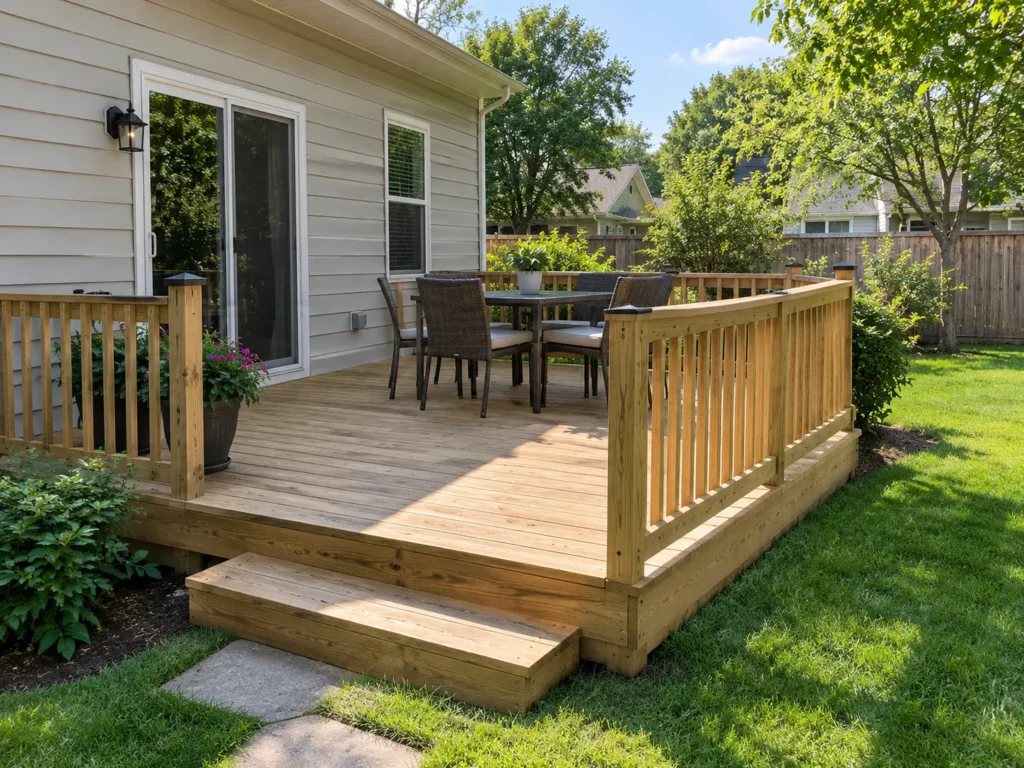
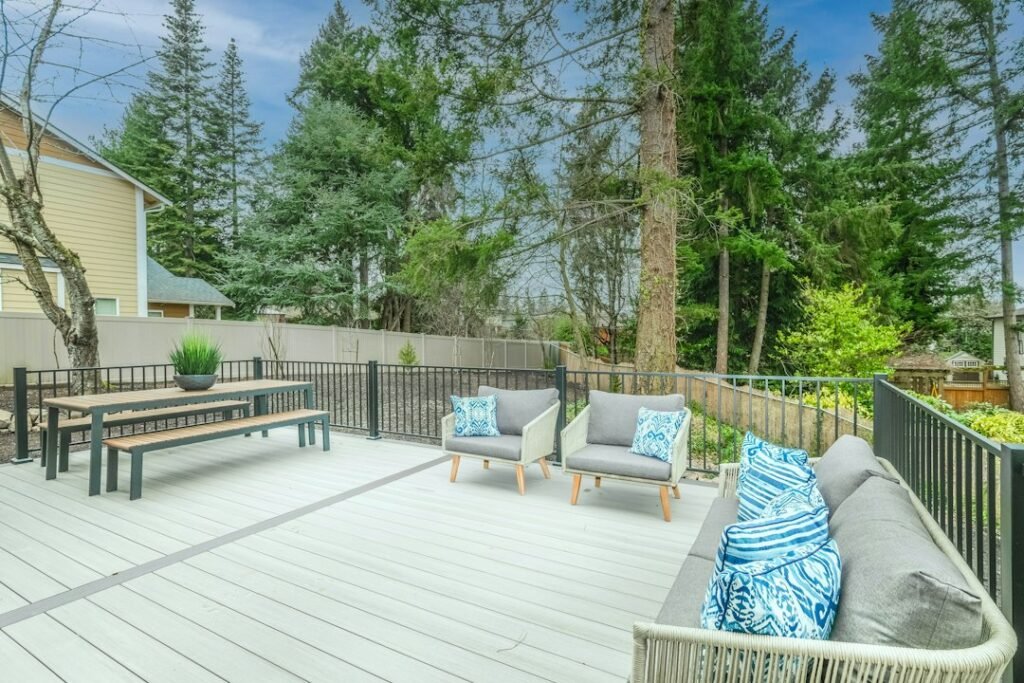
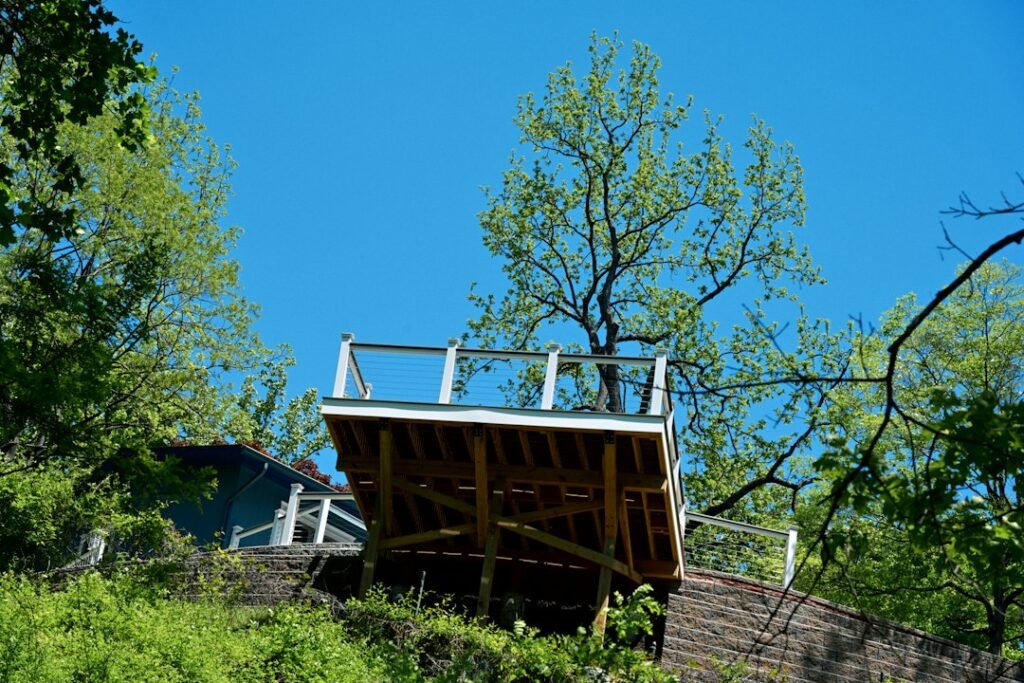
You are stepping into your backyard, looking at an empty patch of grass, and imagining hosting summer barbecues, relaxing with your morning coffee, and extending your living space outdoors. Then reality sets in: you need to figure out what this project is actually going to cost you. So, how much does deck installation cost in 2026?
For a standard 200 to 300 square foot backyard deck, the national planning range is between $4,000 and $12,000, with most homeowners spending an average of $7,500 for professional installation. On a per-square-foot basis, expect to pay $25 to $45 for basic pressure-treated wood, $50 to $100 for composite materials, and $75 to $150 or more for exotic hardwoods or multi-level custom designs. Your final total depends heavily on your choice of decking material, local labor rates, site grading, stairs, and custom features like built-in seating and high-end railings.
This article breaks down every single cost component associated with building a new outdoor living space. You will find square footage estimates, material comparisons, labor breakdowns, hidden fees, and practical ways to keep your project budget under control.
How Much Does Deck Installation Cost in 2026?

Planning a new outdoor addition requires understanding current market pricing. While lumber prices have stabilized somewhat compared to previous years, skilled labor shortages and rising municipal permit fees continue to push overall project totals upward. Most professional installations range from $25 to $75 per square foot for standard materials and designs.
When you want to run preliminary numbers for your specific yard layout, you can quickly evaluate options using our Deck Installation Cost Calculator. The table below outlines typical planning ranges based on common deck sizes for a standard single-level, ground-level or low-elevation pressure-treated wood deck.
| Deck Size (Square Feet) | Estimated Cost Range | Average Cost per Sq. Ft. |
|---|---|---|
| 100 sq. ft. (10×10) | $2,500 – $5,000 | $25 – $50 |
| 200 sq. ft. (10×20) | $5,000 – $10,000 | $25 – $50 |
| 300 sq. ft. (15×20) | $7,500 – $15,000 | $25 – $50 |
| 400 sq. ft. (20×20) | $10,000 – $22,000 | $25 – $55 |
| 500 sq. ft. (20×25) | $13,500 – $30,000 | $27 – $60 |
Estimated Deck Cost by Size
Chart note: Bars represent typical total planning ranges for standard single-level pressure-treated wood decks.
These figures serve as planning estimates rather than guaranteed contractor quotes. Costs shift toward the lower end if you choose basic materials, flat terrain, and standard rectangular configurations. Conversely, complex multi-tier designs, challenging soil conditions, and high-end composite boards push costs toward the high end.
Cost per Square Foot and Calculation Method

Unit pricing gives you a fast benchmark for comparing different proposals or materials. For example, if a contractor charges $45 per square foot for a 300-square-foot pressure-treated wood deck, the math is straightforward: 300 x $45 = $13,500. However, unit pricing is strictly a comparison tool and rarely reflects the exact line-item total.
Try Our Free Calculators:
Lump-sum contractor bids usually account for fixed mobilization costs, permit fees, and structural framing that do not scale evenly with square footage. To ensure you are comparing apples to apples when reviewing contractor bids, use our Deck Cost Calculator and ask specifically whether the quote includes the following items:
- Railings and gates: Code-compliant safety railings for elevated decks.
- Building permits and inspections: Local municipal paperwork and structural plan reviews.
- Demolition and haul-away: Tearing down and disposing of an existing old deck.
- Site excavation and footings: Digging and pouring concrete footings below the local frost line.
- Material delivery fees: Trucking heavy lumber, composite boards, and concrete to your build site.
Cost by Deck Size

Deck size remains the single biggest driver of total material and labor expense. Expanding your footprint by just a few feet adds significant lumber, joist spacing requirements, and hardware costs. Furthermore, decks over 30 inches off the ground in most US jurisdictions trigger stricter IRC structural code requirements, including reinforced posts and continuous load-path fasteners.
| Size Category | Typical Dimensions | Estimated Total Cost |
|---|---|---|
| Small Patio Deck | 100 sq. ft. | $3,000 – $6,500 |
| Medium Family Deck | 200 sq. ft. | $6,000 – $13,000 |
| Standard Large Deck | 300 sq. ft. | $9,000 – $19,500 |
| Spacious Entertaining Deck | 400 sq. ft. | $12,000 – $26,000 |
| Large Custom Deck | 500+ sq. ft. | $16,000 – $35,000+ |
For more detailed sizing breakdowns, our Deck Area Calculator helps you determine exact square footage based on perimeter dimensions and complex corner offsets.
Cost by Material Selection

Your choice of decking material dictates both the upfront installation price and your long-term maintenance schedule. Each material category comes with distinct advantages and trade-offs regarding durability, appearance, and upkeep.
Pressure-Treated Wood
Pressure-treated southern yellow pine is the industry workhorse and the most affordable option available. It handles structural framing exceptionally well and is treated with chemical preservatives to resist rot and insects.
- Advantages: Lowest upfront cost, easy to cut and fasten, readily available at any lumberyard.
- Trade-offs: Requires annual sealing, staining, or painting; prone to warping, splitting, and splintering over time.
Composite Decking
Composite boards combine recycled wood fibers and plastic polymers into a durable, splinter-free shell. Higher-end capped composites feature a protective polymer shield that resists fading, staining, and scratching.
Also Read:
- Composite Deck vs Wood Deck Cost: 2026 Price Comparison
- Deck Cost Calculator: Complete 2026 Guide to Pricing and Materials
- How Much Does a Roof Cost in 2026? Pricing, Materials, and Labor Breakdown
- How Much Does a Deck Cost? 2026 Pricing Guide
- Wood Fence Cost Guide 2026: Material, Labor, and Installation Prices
- Advantages: Virtually maintenance-free, does not splinter, resists fading and staining, long manufacturer warranties.
- Trade-offs: High initial purchase price, gets hotter in direct sunlight than natural wood, requires specialized hidden fasteners. For a more detailed breakdown, try our Composite Deck Cost Calculator.
PVC and Cellular PVC Decking
PVC decking contains zero wood content, making it completely impervious to moisture, mold, and mildew. It is lightweight and mimics the grain pattern of exotic hardwoods.
- Advantages: Maximum moisture resistance, lightweight, superior color retention, ideal for poolside installations.
- Trade-offs: Premium price point, can feel slightly more plastic-like underfoot than wood or composite.
Exotic Hardwoods
Ipe, Cumaru, Tigerwood, and Mahogany are ultra-dense tropical hardwoods renowned for their incredible natural durability and rich, dark colorations.
- Advantages: Exceptional natural lifespan (often 50+ years), fire resistant, stunning high-end appearance.
- Trade-offs: Extremely heavy and dense, requires pre-drilling every single screw hole, expensive specialized labor, and periodic oiling to maintain color.
Material Type Typical Cost Level Maintenance Key Considerations Pressure-Treated Wood Low ($15-$25/sq. ft. materials) High (Annual stain/seal) Prone to warping and cracking Standard Composite Medium ($30-$55/sq. ft. materials) Low (Soap and water) Retains heat in direct sun Capped PVC High ($40-$70/sq. ft. materials) Very Low Best moisture and mold resistance Exotic Hardwood Very High ($45-$85+/sq. ft. materials) Medium (Natural oiling) Requires specialized installation tools What Makes Up the Total Cost of a Deck?
Proper site preparation and material staging keep projects on schedule. Breaking down a contractor estimate reveals that materials represent roughly 40% to 50% of the total budget, while labor accounts for another 35% to 45%. The remaining 10% to 15% covers permits, engineering, site prep, and waste disposal.
Substructure and Framing
The posts, beams, joists, and ledger board form the skeleton of your deck. Even if you choose expensive composite surface boards, your framing will likely consist of pressure-treated lumber or galvanized steel framing. Strong structural framing is non-negotiable for safety and structural longevity.
Labor and Contractor Rates
Professional deck builders typically charge between $15 and $35 per square foot just for labor, or $50 to $100+ per hour per worker. Labor rates spike in major metropolitan areas with high costs of living and in regions where frost-line depths require deep concrete footings.
Railings and Stairs
Safety codes mandate railings for any deck surface elevated more than 30 inches above the adjacent grade. Railing costs vary wildly based on material: basic wood pickets cost $15 to $30 per linear foot, aluminum or vinyl runs $30 to $60, and cable or glass railing systems can cost $100 to $200+ per linear foot. Stairs add $500 to $2,000 depending on the number of risers and stringers.
Illustrative Scenario: Building a 300 Sq. Ft. Composite Deck
To see how these costs combine in the real world, consider an illustrative scenario for building a standard 300-square-foot mid-grade composite deck with aluminum railings and one set of four-step stairs, built on flat suburban terrain.
Project Component Estimated Cost Permits, Engineering, and Site Survey $400 – $800 Excavation and Concrete Footings $800 – $1,500 Pressure-Treated Framing Lumber & Hardware $2,500 – $3,500 Mid-Grade Composite Decking Boards $3,500 – $5,000 Aluminum Railings (80 linear feet) $3,000 – $5,000 Stair Construction (1 set, 4 steps) $800 – $1,500 Professional Labor & Installation $4,500 – $7,000 Total Estimated Project Cost $15,500 – $24,300 Demolition and Site Prep Costs
If you are replacing an old, weathered deck, you must factor in demolition and disposal expenses. Tearing down an existing structure typically costs $5 to $15 per square foot, which includes pulling up old boards, dismantling the frame, breaking apart concrete footings, and hauling debris away in a roll-off dumpster.
Site preparation also involves grading sloped earth, laying down weed barrier fabric, and applying gravel beneath low-clearance ground-level decks to prevent moisture buildup and weed growth against your framing members.
Hidden and Additional Costs to Anticipate
Unforeseen expenses can derail a home improvement budget if you fail to plan for them. Keep these common extras in mind during your initial financial planning:
Electrical wiring: Adding stair riser lights, post cap lights, and weatherproof outlets requires a licensed electrician and adds $500 to $2,500.Built-in features: Integrated benches, planter boxes, pergolas, or multi-tier transitions can easily add $2,000 to $6,000 to your project total.Difficult site access: If heavy machinery cannot reach your backyard and workers must carry materials by hand around your home, labor surcharges apply.Soil conditions: Striking solid bedrock or encountering high water tables while digging footings requires specialized drilling equipment or extra concrete pumping.Common Mistakes to Avoid During Deck Installation
Avoiding costly blunders ensures your new investment stands strong for decades. Watch out for these frequent pitfalls:
- Skipping the building permit: Building without a permit violates local municipal codes and can create massive headaches when you try to sell your home.
- Ignoring local frost lines: Failing to dig footings deep enough below the local frost line causes your deck posts to heave during freeze-thaw cycles.
- Failing to use flashing: Improper ledger board flashing against your house wall is the number one cause of catastrophic water leaks and rot damage to your home’s rim joist.
- Underestimating joist spacing: Spacing joists too far apart causes composite boards to sag and bounce under heavy foot traffic.
How to Lower the Cost of Your Deck Project
You can manage your overall investment without sacrificing structural integrity or safety by applying a few practical strategies:
- Keep the shape simple. Sticking to a standard rectangular or square footprint minimizes complicated cuts, wasted materials, and intensive labor hours.
- Choose pressure-treated wood framing. Even if you opt for composite surface boards, framing the substructure with pressure-treated lumber saves thousands compared to steel framing.
- Build closer to the ground. Ground-level decks under 30 inches high eliminate the need for expensive safety railings, complex stair systems, and heavy-duty elevated posts.
- Tack on DIY tasks where safe. You can save on labor costs by handling site cleanup, staining, or railing installation yourself, provided you leave structural framing to professionals.
How to Get an Accurate Deck Estimate
Gathering precise contractor proposals requires clear preparation. Before reaching out to local builders, put together a sketch of your desired dimensions, note any grade changes in your yard, and decide on your preferred material tier. Request at least three itemized bids that break down materials, labor, permits, and waste hauling separately. Verify that each contractor is fully licensed, carries general liability and workers’ compensation insurance, and pulls all necessary municipal permits on your behalf.

Frequently Asked Questions
Does a deck add value to your home?
Yes, a well-built deck typically recoups 65% to 75% of its initial installation cost upon resale. Composite decks often provide a higher return on investment because buyers value their low maintenance requirements.
How long does it take to install a deck?
Most professional contractors can build a standard 300-square-foot deck in 5 to 10 working days. Complex multi-level builds, custom curved designs, or projects requiring extensive excavation may take 2 to 4 weeks.
Do I need a building permit for a new deck?
In almost all US municipalities, building permits are required for decks attached to a home, decks over a certain height (usually 30 inches), or decks larger than 120 or 200 square feet depending on local codes.
Is it cheaper to build a wood or composite deck?
Pressure-treated wood is significantly cheaper upfront, costing roughly half as much as composite materials. However, composite decking saves money over time because it eliminates the ongoing costs of staining, sealing, and board replacement.
What is the cheapest material for building a deck?
Pressure-treated southern yellow pine is the least expensive decking material available on the market, with material costs averaging $15 to $25 per square foot.
Can I build a deck myself as a DIY project?
Experienced DIYers with advanced carpentry skills can build a ground-level deck, but elevated decks require strict adherence to structural load paths and building codes. Mistakes in framing or ledger attachment can lead to structural collapse.
How deep do deck footings need to be?
Deck footings must extend below your local frost line to prevent frost heaving, which typically ranges from 12 inches in warm southern climates to 48 inches or deeper in northern US regions.
Final Takeaway
Installing a new deck is one of the most rewarding home improvements you can undertake, instantly expanding your living space and boosting property value. Successfully budgeting for the project requires balancing material quality, labor rates, and essential safety features like proper footings and railings.
- National Planning Range: $4,000 to $12,000 for standard builds.
- Per-Square-Foot Costs: $25 to $45 for wood, $50 to $100 for composite.
- Primary Cost Drivers: Total square footage, material selection, and site complexity.
Before committing to a contractor, utilize our Deck Installation Cost Calculator to model your expenses, and always secure multiple itemized quotes from licensed local builders.
Planning estimates vary by geographic location, material supplier, and site conditions and should be verified with local contractors.