You are standing in your yard, staring at a patch of mud or ruts, trying to figure out how many truckloads of stone it will take to transform it into a solid, clean surface. Ordering too little leaves you stuck with incomplete work and extra delivery fees, while ordering too much leaves you with expensive piles of rock cluttering your property. So, how do you figure out the exact tonnage without overspending?
To calculate gravel for a driveway, multiply your driveway length in feet by its width in feet to find the square footage, then multiply by the depth in inches divided by 12 to get cubic feet. Divide that total by 27 to find cubic yards, and multiply by 1.4 to convert cubic yards to tons of crushed stone.
Getting this math right protects your budget and ensures your base layer holds up to daily vehicle traffic. Whether you are building a brand-new approach or refreshing an existing surface, using a reliable gravel driveway calculator method prevents costly estimation errors. This guide walks you through measurements, formulas, material choices, and ordering strategies to help you get the job done right the first time.
The Core Formula: How to Calculate Cubic Yards and Tons

Before calling a local quarry, you need to break down your driveway’s dimensions into volume and weight. Aggregate stone is typically sold by the ton or by the cubic yard, so understanding the math is essential. You can cross-check your manual calculations using our Aggregate Calculator to ensure your numbers line up before placing an order.
The standard formula for rectangular driveways is straightforward. Take your measurements in feet, apply the depth conversion, and convert the volume into weight based on standard stone density.
Try Our Free Calculators:
Step-by-Step Mathematical Example
Let us walk through a practical scenario for a standard residential driveway measuring 50 feet long, 10 feet wide, and requiring a compacted depth of 4 inches.
- Calculate Square Footage: 50 feet (length) × 10 feet (width) = 500 square feet.
- Convert Depth to Feet: 4 inches ÷ 12 inches = 0.333 feet.
- Calculate Cubic Feet: 500 square feet × 0.333 feet = 166.5 cubic feet.
- Convert to Cubic Yards: 166.5 cubic feet ÷ 27 cubic feet per cubic yard = 6.17 cubic yards.
- Convert to Tons: Standard crushed gravel weighs approximately 1.4 tons per cubic yard. Therefore, 6.17 cubic yards × 1.4 tons = 8.64 tons.
For complex layouts with curves, circles, or varying widths, you can simplify the math by using our Driveway Area Calculator to segment the space before applying the depth formula.
Standard Driveway Dimensions and Material Requirements

Driveway dimensions vary based on vehicle types, turnaround spaces, and property layouts. Standard single-car driveways typically measure 10 to 12 feet wide, while double-car driveways range from 20 to 24 feet wide. Standard depths depend on the layer you are installing; a sub-base layer requires 4 to 6 inches of large crushed stone, while a top dressing requires 2 to 3 inches of smaller, finer aggregate.
| Driveway Size (Sq Ft) | Depth (Inches) | Cubic Yards Needed | Estimated Tons (Crushed Stone) |
|---|---|---|---|
| 300 sq. ft. (Small single) | 4 inches | 3.7 yds³ | 5.2 tons |
| 500 sq. ft. (Standard single) | 4 inches | 6.2 yds³ | 8.7 tons |
| 1,000 sq. ft. (Long single / Double) | 4 inches | 12.3 yds³ | 17.2 tons |
| 1,500 sq. ft. (Large double) | 4 inches | 18.5 yds³ | 25.9 tons |
| 2,000 sq. ft. (Long rural driveway) | 4 inches | 24.7 yds³ | 34.6 tons |
Estimated Gravel Tonnage by Driveway Size
Chart note: Estimates assume a standard 4-inch compacted depth using standard crushed aggregate stone.
These figures represent planning estimates based on standard stone compaction. Actual material requirements may vary depending on sub-grade soil conditions, existing ruts, and how tightly the aggregate packs down during rolling.
Accounting for Waste and Settling
One of the most common mistakes DIY builders make is ordering the exact theoretical volume of stone calculated on paper. Ground compaction, uneven sub-grades, and stone migration into soft soil mean you will always need more material than the basic formula suggests.
Also Read:
Always add a waste and settling factor of 5% to 10% to your final tonnage. If your calculation shows you need 15 tons of gravel, ordering 16.5 tons accounts for loose shoulders, grading losses, and the initial settling that occurs when vehicles drive over the fresh material.
Failing to account for waste often forces homeowners to pay a second, separate delivery fee for a small top-off load, which is significantly more expensive per ton than buying the total amount in your initial delivery. If you are also planning surrounding hardscapes or concrete borders, our Material Calculator can help balance your overall site aggregates.
Choosing the Right Gravel Size and Type

Different layers of a gravel driveway serve different structural purposes. Selecting the correct aggregate grade ensures proper drainage and prevents premature rutting.
Crushed Stone (Graded Aggregate Base)
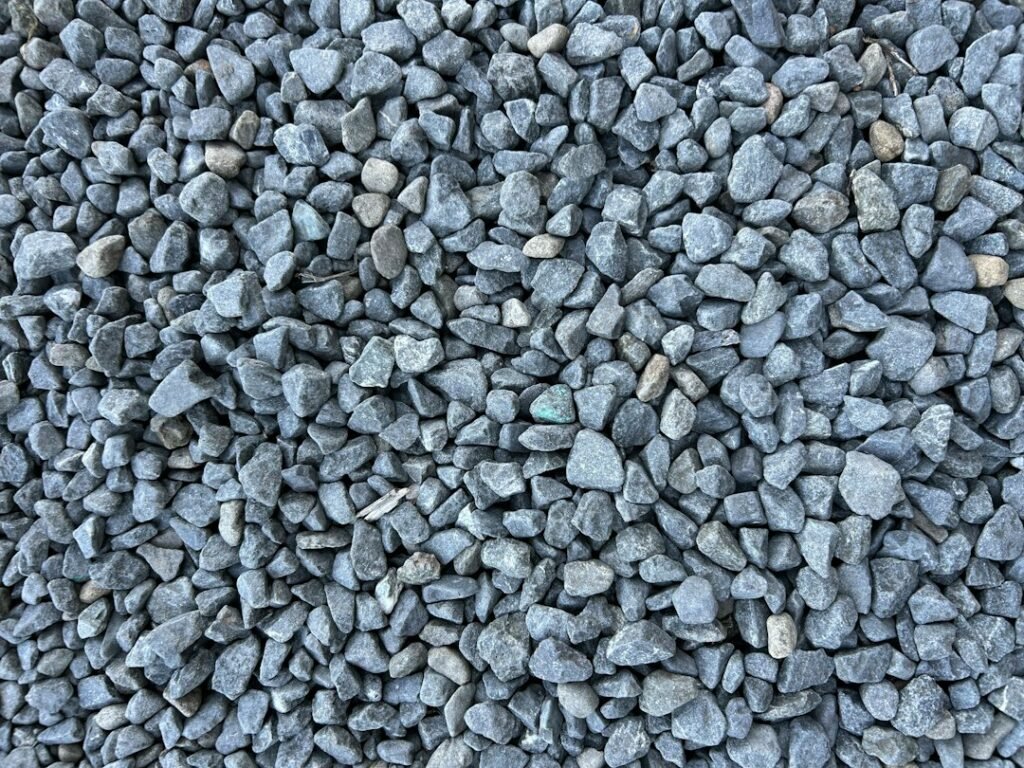
Crushed stone features angular edges that lock together tightly under heavy weight, creating a stable foundation. Sizes like #3 or #4 stone are used for the deep base layer, while #411 or #57 crushed stone works well for the surface layer because smaller particles wedge neatly between larger ones.
- Pros: Excellent weight-bearing capacity, resists shifting, packs firmly.
- Cons: Rough on bare feet, can be dusty in dry summer months.
- Best Use: Entire driveway build, especially sub-bases and high-traffic paths.
Pea Gravel
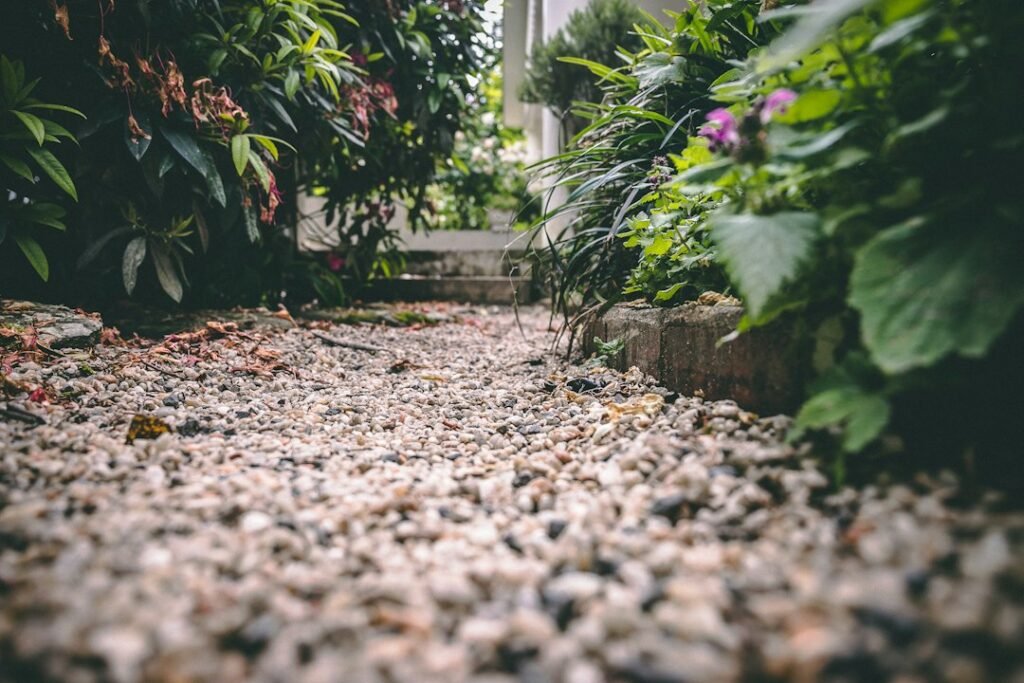
Pea gravel consists of small, smooth, rounded stones, often naturally weathered by water. While visually appealing in landscaping, it is rarely recommended as a primary driveway material because the round stones act like ball bearings, shifting outward under tires and causing cars to spin their wheels.
- Pros: Smooth texture, attractive multi-color appearance, affordable.
- Cons: Unstable under vehicle tires, migrates out of the driveway easily.
- Best Use: Low-traffic parking pads, decorative borders, or pedestrian walkways.
Jersey Gravel and Crusher Run
Crusher run, also known as quarry process, is a mixture of crushed stone and stone dust. When compacted, the dust binds the larger aggregate into a nearly solid surface that sheds water effectively.
- Pros: Packs down extremely hard, highly cost-effective, low maintenance.
- Cons: Prone to mud if drainage is poor, can become dusty when dry.
- Best Use: Main surface layer for rural and suburban gravel driveways.
| Material Type | Typical Cost Level | Maintenance | Key Considerations |
|---|---|---|---|
| Crushed Stone (#57) | Moderate | Low | Locks together well; ideal for wearing courses. |
| Crusher Run / Quarry Process | Low | Low | Includes stone dust for superior packing and firmness. |
| Pea Gravel | Moderate | High | Unstable for vehicle traffic; shifts under tires. |
| Recycled Concrete | Low | Low | Eco-friendly alternative; packs tightly like crusher run. |
What Makes Up the Cost of a Gravel Driveway?

Calculating the physical amount of stone is only the first step; budgeting for the project requires looking at material, delivery, and site preparation costs. For a comprehensive financial overview before ordering supplies, you can use our Driveway Cost Calculator to estimate total contractor or DIY expenses.
Material Costs
Raw aggregate stone typically ranges from $25 to $50 per ton delivered locally. Specialty decorative stones or colored river rock can push costs higher. Bulk delivery truck fees often depend on mileage from the nearest quarry.
Site Preparation and Excavation
A durable driveway requires removing topsoil, grading the sub-grade, and installing geotextile fabric to prevent mud from mixing with your clean stone. Skipping excavation leads to sinking stones and recurring ruts within the first year.
Common Mistakes to Avoid When Ordering Gravel
Avoiding standard calculation pitfalls saves time, labor, and money during your driveway project.
- Measuring only the visible surface: If your driveway has deep ruts or depression pockets, failing to measure the depth of those dips will leave you short on stone.
- Ignoring compaction ratios: Loose gravel takes up more space in a truck bed than it does after being rolled or driven over. Always calculate based on compacted depth.
- Skipping geotextile fabric: Laying gravel directly onto bare clay or topsoil guarantees that groundwater will push mud up through your stone within months.
- Forgetting delivery truck limits: Heavy tri-axle dump trucks carry up to 20 tons of gravel. If your driveway or bridge cannot handle a 60,000-pound truck, you will need to pay for multiple smaller truckloads.
How to Get an Accurate Estimate
Gathering precise measurements and local supplier pricing ensures your project stays on budget. Measure your length and width at multiple points, as many driveways vary in width. Call local quarries to get current per-ton prices and delivery minimums. For an alternative surfacing comparison, you can evaluate project expenses using our Asphalt Driveway Cost Calculator or check rigid paving options with our Concrete Driveway Cost Calculator before finalizing your choice.
Frequently Asked Questions
How many tons of gravel do I need for a 500 square foot driveway?
For a standard 500 square foot driveway at a compacted depth of 4 inches, you will need approximately 6.2 cubic yards of stone, which translates to about 8.7 tons of crushed aggregate.
How do I convert cubic yards of gravel to tons?
Standard crushed gravel weighs approximately 1.4 tons per cubic yard. Multiply your total cubic yards by 1.4 to find the required weight in tons.
Should I use pea gravel for my driveway?
Pea gravel is generally discouraged for vehicle driveways because the smooth, round stones shift under tires, making it difficult to drive and park without spinning wheels. Angular crushed stone packs together much more securely.
What is crusher run and why is it used?
Crusher run, or quarry process, is a blend of crushed stone and stone dust. When compacted, the stone dust binds the larger aggregate together, creating a hard, stable surface that resists shifting and ruts.
How deep should a gravel driveway base be?
A standard residential gravel driveway requires a total depth of 4 to 6 inches. If your soil is particularly soft or prone to heavy commercial vehicle traffic, a base layer of larger stone followed by a wearing course is recommended.
Why do I need to add extra gravel to my calculation?
Adding a 5% to 10% waste and settling factor accounts for stone loss into soft sub-grade soil, uneven grading depths, and natural compaction when vehicles begin driving over the fresh material.
Final Takeaway
Calculating gravel accurately prevents project delays, eliminates costly second delivery fees, and ensures your driveway maintains a solid, durable surface for years to come. By measuring precise square footage, accounting for proper compaction depth, and factoring in a 10% waste allowance, you can order the exact tonnage required.
- Calculate volume: Multiply length by width by depth in feet, then divide by 27.
- Convert to weight: Multiply cubic yards by 1.4 to determine tons of crushed stone.
- Choose angular stone: Opt for crusher run or graded crushed stone over rounded pea gravel for vehicle stability.
The biggest cost variables remain local quarry pricing, delivery distance, and necessary sub-base excavation. For preliminary planning estimates, BuildCost.online’s Driveway Cost Calculator can help you budget effectively before requesting local contractor quotes.
Estimates vary by location, supplier and site conditions and should be verified locally.