Introduction to Roof Repair Expenses
You spot a suspicious stain on your bedroom ceiling, or perhaps a sudden downpour reveals water dripping directly into your attic space. When roofing issues arise, uncertainty over potential expenses immediately sets in. So, how much does roof repair cost in 2026? Navigating the financial landscape of property maintenance requires a firm grasp of current market conditions, material availability, and labor rates in your specific region.
For most standard residential projects, roof repair costs range between $350 and $1,500, with homeowners typically spending around $850 for common issues like minor leaks, pipe boot replacements, and localized shingle damage. Minor fixes such as patching a small leak may cost as little as $150 to $400, whereas major structural repairs involving rafters, decking, or extensive storm damage can range from $2,500 to $7,000 or more. Total pricing depends heavily on the extent of the damage, roofing materials, pitch steepness, local labor rates, and whether permits are required by your municipality under local IRC building codes.
Understanding what drives these estimates helps you budget effectively, avoid contractor surprises, and decide whether a DIY patch is safe or if you need a licensed professional. Read on for a complete breakdown of project sizes, material specifics, labor fees, and actionable tips to keep your roof repair budget under control.
How Much Does Roof Repair Cost in 2026?

Roof repair pricing varies widely based on the exact scope of work required. While minor maintenance tasks require only a bundle of shingles and a tube of roofing sealant, complex repairs involving rotten roof decking or flashing failures around chimneys require specialized labor and time. To help you plan, we have compiled common repair scenarios and their estimated planning ranges.
| Repair Project Type | Estimated Cost Range | Typical Unit Cost |
|---|---|---|
| Minor Leak Patch (Shingles & Sealant) | $150 – $400 | $150 – $400 flat rate |
| Pipe Boot / Vent Flashing Replacement | $250 – $600 | $250 – $600 per vent |
| Valley Repair (Partial) | $500 – $1,500 | $15 – $30 per sq. ft. |
| Damaged Decking / Plywood Replacement | $400 – $1,200 | $100 – $250 per sheet |
| Chimney Flashing Repair | $400 – $1,000 | $400 – $1,000 flat rate |
| Major Structural Rafter Repair | $1,500 – $4,500 | Varies by engineering scope |
Estimated Roof Repair Cost by Scope
Chart note: Estimated costs based on typical contractor pricing for residential repairs.
These figures represent planning estimates, not guaranteed contractor quotes. Costs skew toward the low end if you have easy roof access and simple asphalt shingles, while steep pitches, multi-story homes, or premium slate and tile materials push expenses toward the high end. Planning for contingencies—such as unexpected rotten plywood discovered once shingles are removed—ensures your project stays on track financially.
Cost per Square Foot and Unit Pricing
Contractors frequently evaluate specific damaged sections using per-square-foot metrics to ensure fair pricing. A square in roofing terminology equals 100 square feet. For instance, replacing a damaged section of underlayment and shingles measuring 300 square feet at an average rate of $12 per square foot yields a subtotal of $3,600 (300 x $12 = $3,600). Unit pricing serves purely as a comparison tool rather than a final bill, because mobilization fees and minimum service charges apply regardless of job size.
When reviewing bids, remember that smaller repair jobs often carry a flat minimum service charge ranging from $250 to $500 simply to dispatch a crew and set up ladders. This means fixing a single shingle can cost as much per hour of labor as fixing ten shingles. Knowing how unit rates translate into total job costs prevents sticker shock when the formal estimate arrives.
Before signing any agreement, ask specifically whether the quote includes:
Try Our Free Calculators:
- Debris haul-away and dumpster rental fees
- Local building permit and inspection costs
- Underlayment and ice-and-water shield replacement
- Matching discontinued shingle colors or styles
- Warranty coverage on both materials and workmanship
Cost by Type of Roof Damage

Different types of damage require entirely different intervention techniques. Identifying the root cause of your roofing problem ensures you budget accurately for the fix and prevent recurring water infiltration.
Shingle Blow-Offs and Granule Loss
Missing or curling shingles expose your underlayment to ultraviolet degradation and moisture. Replacing a few wind-damaged architectural shingles typically costs between $200 and $500. This involves removing damaged nails, sliding in new tabs, and securing them with roofing cement. Granule loss across an entire slope indicates aging shingles that may require partial replacement rather than simple spot patching.
Roof Leaks and Penetrations
Water infiltration rarely occurs directly through a healthy shingle field; it usually enters around roof penetrations. Fixing a leaking skylight, plumbing vent, or exhaust fan boot costs $250 to $750. Technicians must strip old flashing, install new waterproof membranes, and re-seal the penetration perimeter. Ignoring these areas lets water travel along rafters, rotting framing members far away from the actual leak source.
Flashing Failures
Metal flashing channels water away from vulnerable joints like valleys and wall intersections. Replacing rusted or buckled step flashing costs $400 to $1,200 depending on linear footage and accessibility. If you are comparing future options, you can use our Roof Repair Cost Calculator to model different repair scopes before calling contractors.
Sagging Roof Decking
A sagging roof indicates structural distress, moisture rot, or overloaded framing. Repairing compromised plywood decking and reinforcing underlying rafters ranges from $1,500 to $5,000. Ignoring this issue can lead to catastrophic structural failure, making immediate professional intervention essential.
Cost by Roofing Material

The material covering your home dramatically influences repair complexity and material procurement costs.
| Roofing Material | Typical Cost Level | Maintenance Needs | Key Considerations |
|---|---|---|---|
| Asphalt Shingle | Low to Moderate | Low | Easy to patch, widely available, vulnerable to heavy wind |
| Metal Panels / Standing Seam | Moderate to High | Very Low | Durable, requires specialized fasteners and flashing |
| Clay or Concrete Tile | High | Moderate | Heavy weight, fragile under foot traffic, long lifespan |
| Natural Slate | Very High | Low | Extremely durable, requires master artisan labor |
| Wood Shakes / Shingles | High | High | Susceptible to rot and moss, strict fire codes in some areas |
Asphalt Shingle Repairs
Asphalt shingles are the most common American residential roofing material. They are inexpensive to patch, and most local handymen or roofing crews carry standard colors on hand. Repairs rarely exceed $500 for localized wind or hail damage. However, matching older, faded shingles with brand-new bundles can result in noticeable color discrepancies on your roof.
Also Read:
- How Much Does a Roof Cost in 2026? Pricing, Materials, and Labor Breakdown
- Roof Replacement Cost Guide: 2026 Price Estimates
- How Much Does a New Roof Cost in 2026?
- Hardwood Flooring Cost Guide 2026: Material, Labor, and Installation Prices
- How Much Does Deck Installation Cost in 2026? Pricing, Materials, and Labor Breakdown
Metal Roof Repairs
Metal roofing resists fire and wind exceptionally well, but repairs require matching fastener types and specialized sealants. Fixing a leaking screw line or replacing a damaged panel generally costs between $400 and $1,200. Technicians must use specialized neoprene washers and non-corrosive fasteners to prevent galvanic reactions with the metal panels.
Tile and Slate Repairs
Clay tiles and slate stones are brittle. Walking on them without specialized pads cracks adjacent tiles. Professional tile replacement costs $600 to $1,500 because technicians must lift interlocking tiles and replace damaged underlayment beneath them. Sourcing matching historic slate or rare clay tile profiles can also introduce freight shipping delays and higher material fees.
What Makes Up the Cost of Roof Repair?

Breaking down a roofing invoice reveals several distinct cost components that every homeowner should understand.
Labor Rates
Labor accounts for roughly 60% to 70% of a standard roof repair bill. Skilled roofers command hourly rates between $50 and $100, while specialized tradesmen working on historic slate or steep architectural roofs charge even higher rates. Crews must factor in travel time, safety setup, and cleanup when pricing out labor.
Materials and Fasteners
Quality matters when sealing your home against the elements. Premium underlayments, ice-and-water shields, corrosion-resistant nails, and matching flashing add to material expenses but prevent repeat leaks. Buying contractor-grade materials rather than cheap retail alternatives ensures your repair survives seasonal thermal expansion and contraction.
Roof Pitch and Height
Steep roofs exceeding a 6:12 pitch require safety harnesses, scaffolding, or roof jacks. Multi-story homes require ladder safety setups that add labor hours and equipment fees. Conversely, low-slope roofs require specialized multi-ply membrane patching techniques rather than standard shingle replacement.
Illustrative Repair Scenario Breakdown
To visualize how these costs combine in a real-world project, consider an illustrative scenario: fixing a major leak around a brick chimney on a two-story asphalt shingle roof.
| Cost Component | Estimated Share | Estimated Cost |
|---|---|---|
| Labor (2 Technicians, 1 Day) | 55% | $825 |
| Materials (Flashing, Ice Shield, Shingles) | 25% | $375 |
| Equipment & Safety Setup | 10% | $150 |
| Disposal & Permit Fees | 10% | $150 |
| Total Estimated Project Cost | 100% | $1,500 |
This comprehensive breakdown demonstrates that labor is consistently the largest line item on any professional roofing quote, followed by specialized waterproofing materials and safety compliance measures.
Detailed Step-by-Step Roof Repair Process
Understanding the procedural workflow executed by professional roofing technicians helps you prepare your property and household for the disruption of an active job site.
- Initial Inspection and Diagnosis: Technicians inspect the attic and exterior surface to trace the precise source of the leak or structural failure.
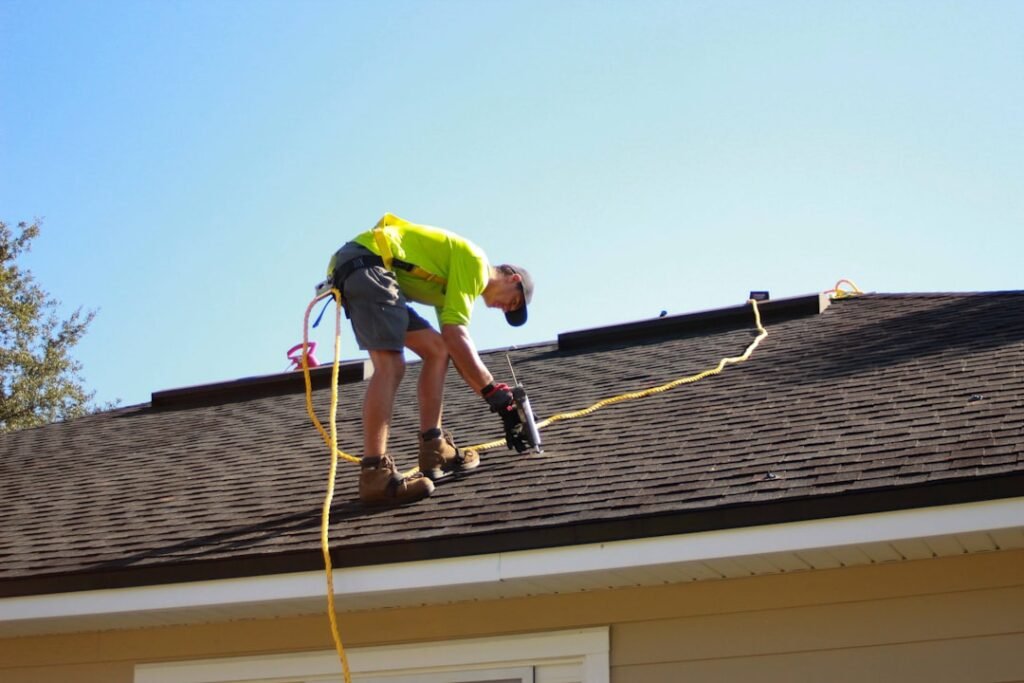
- Safety Preparation: Crews anchor ladder equipment, set up fall-protection harnesses, and lay down ground tarps to catch falling debris and old nails.
- Debris and Damaged Material Removal: Damaged shingles, rusted flashing, and compromised nails are stripped away to expose sound decking.
- Substrate Evaluation and Repair: Rotten plywood decking is cut out and replaced with code-compliant exterior-grade OSB or plywood panels.
- Waterproofing Installation: Ice-and-water shield membranes and fresh underlayment are laid down around valleys, penetrations, and eaves.
- New Material Installation: Replacement shingles, tiles, or metal panels are fastened according to manufacturer specifications, followed by final sealant application and site cleanup.
DIY Roof Repair vs. Hiring a Professional
Tackling a minor roof repair yourself can save money on labor, but roofing carries inherent physical risks. Replacing a missing shingle or applying a bead of flashing sealant is manageable for confident DIYers with proper ladder safety gear. For preliminary planning before any project, you can use our Roof Replacement Cost Calculator to see if a repair still makes financial sense compared to a full tear-off.
However, major structural work, steep pitches, slate repairs, or warranty-dependent installations should always be left to insured, licensed professionals. Falls from roofs result in severe injuries, and improper DIY flashing installation often drives water directly into your wall cavities, causing hidden mold growth. Furthermore, walking improperly across a sloped roof can crack tiles, break shingle tabs, or loosen ridge caps, unintentionally creating more damage than you started with.
Hidden or Additional Costs to Anticipate

Unforeseen issues frequently lurk beneath the visible shingle layer once repairs begin. Anticipating these potential add-ons prevents budget shortfalls.
- Rotted Plywood Decking: Water that pooled undetected often rots the underlying plywood sheets, adding $100 to $250 per sheet for replacement.
- Gutter and Fascia Damage: Leaks frequently spill over into wooden fascia boards and gutter attachments, requiring carpentry repairs.
- Mold Remediation: Extended attic leaks encourage mold growth, requiring professional treatment before interior insulation can be replaced.
- Emergency Callout Fees: Calling a roofer during an active midnight storm or holiday weekend incurs emergency dispatch surcharges of $200 to $500.
- Permit and Inspection Fees: Municipalities often require building permits for structural repairs or major flashing overhauls, adding $50 to $200 in local government fees.
Common Mistakes to Avoid
Avoiding common pitfalls ensures your roof repair holds up against severe weather and protects your investment.
- Ignoring Small Leaks: Waiting until water stains appear on your ceiling allows wood rot to spread silently through your roof framing.
- Mixing Incompatible Materials: Using galvanized steel flashing with aluminum panels triggers galvanic corrosion, destroying the joint quickly.
- Piling Tar Over Flashing: Applying roofing tar as a permanent fix instead of replacing corroded step flashing traps moisture and accelerates decay.
- Failing to Verify Contractor Insurance: Hiring uninsured handymen leaves you personally liable if a worker falls from your roof.
- Neglecting Attic Ventilation: Failing to check attic airflow during a repair can trap moisture and cause premature shingle blistering from underneath.
How to Lower the Cost of Roof Repairs
Strategic planning helps you manage your repair expenses without sacrificing quality.
- Address issues early. Catching a missing shingle before a major storm hits prevents costly interior water damage and structural rot.
- Get multiple quotes. Obtain at least three written estimates from local, licensed roofing contractors to compare labor rates and scope details.
- Bundle minor maintenance. Ask your contractor to clear gutters, reseal pipe boots, and replace loose nails during the same visit to avoid separate service fees.
- Check homeowner’s insurance. If storm damage, hail, or falling tree limbs caused the issue, your insurance policy may cover the repair minus your deductible.
- Schedule during off-peak seasons. Reaching out to roofers during late autumn or early spring can secure more flexible scheduling and competitive labor rates compared to peak post-storm summer rushes.
How to Get an Accurate Roof Repair Estimate
Gathering the right information streamlines the contractor bidding process and prevents misunderstandings.
- Document the damage with clear photos from the ground and attic space if safe to access.
- Note the approximate age of your roof and the material type installed.
- Ask contractors for itemized bids separating labor, materials, and disposal fees.
- Verify that the company holds active general liability and workers’ compensation insurance.
- Confirm whether your contractor offers a workmanship warranty on the repair area.
- Inquire about the expected project timeline and how crews manage unexpected weather disruptions.
Frequently Asked Questions
How do I know if I need a roof repair or a full replacement?
If damage is isolated to less than 25% of the total roof area and the remaining shingles are in good condition, a repair is usually sufficient. However, if your roof is over 20 years old, shows widespread granule loss, or has multiple leaks across different slopes, a full replacement is often more cost-effective in the long run.
Does homeowner’s insurance cover roof repairs?
Insurance typically covers roof repairs if the damage results from sudden Acts of God such as windstorms, hail, fallen tree branches, or fire. Normal wear and tear, age-related deterioration, and deferred maintenance are almost never covered by standard policies.
Can I put new shingles over old damaged shingles?
While laying a second layer of asphalt shingles (overlay) saves money on tear-off labor, it is generally not recommended for repairs. Adding weight can stress your roof framing, and it makes finding the source of underlying leaks nearly impossible. Most building codes permit a maximum of two shingle layers.
How long do roof repairs typically last?
A professional roof repair should last anywhere from 5 to 15 years, depending on the quality of materials used, the weather conditions in your area, and the overall age of the surrounding roof. Repairs made with matching materials and proper flashing usually last until the rest of the roof reaches the end of its lifespan.
What is the average hourly rate for a professional roofer?
Professional roofing labor typically costs between $50 and $100 per hour per worker. Many roofing contractors also charge a minimum service call fee of $150 to $300 just to dispatch a truck and perform an initial diagnostic inspection.
Is it safe to DIY a roof leak repair?
Minor DIY repairs like applying roofing cement or replacing a single missing tab are safe for homeowners comfortable with heights and ladder safety. However, walking on steep slopes, working near power lines, or attempting structural deck repairs should always be left to insured professionals.
Final Takeaway
Roof repairs are an essential investment in protecting your home’s structural integrity and preventing catastrophic interior water damage. Planning ahead and addressing issues promptly keeps minor leaks from turning into major expenses.
- Standard roof repairs range from $350 to $1,500, with an average spend around $850.
- Minor shingle patches start as low as $150, while major structural repairs can exceed $3,000.
- Labor and local accessibility drive a significant portion of total project costs.
The biggest cost variables remain the extent of underlying water damage and your roof’s pitch height. To refine your budget planning, use our Roof Repair Cost Calculator and Roof Replacement Cost Calculator, and always secure multiple written quotes from local licensed contractors.
Planning estimates, not a contractor quote; actual costs vary by location, supplier, and site conditions and should be verified locally.