You are standing in the middle of a patchy lawn or a newly cleared garden bed, staring at a patch of bare dirt, wondering how many bags of soil it will take to fix the problem. Ordering too little means a frustrating second trip to the garden center, while ordering too much leaves you with a massive, muddy mound in your driveway that kills your grass. So, exactly how much topsoil do you need for your project?
To calculate how much topsoil you need, multiply your area’s length by its width in feet, then multiply that by your desired depth in feet (convert inches to decimals by dividing by 12). Divide the resulting cubic feet by 27 to find your total in cubic yards. For a standard 1,000 square foot lawn application at a 2-inch depth, you will need approximately 166 cubic feet, which equals about 6.2 cubic yards or roughly 220 standard 0.75-cubic-foot bags.
Getting the calculation right saves you both money and back-breaking labor. Whether you are prepping for fresh sod, filling raised garden beds, or grading a sloping side yard, estimating accurately is the foundational step of any successful landscaping project. You can check our Soil Cost Calculator and Landscaping Cost Calculator to budget for both the material and installation labor before you buy.
How a Topsoil Calculator Works

A topsoil calculator takes the guesswork out of yard planning by converting surface area and depth into the standard industry measurement units: cubic feet and cubic yards. Most homeowners make the mistake of measuring only the square footage, forgetting that soil volume depends entirely on how deep the layer needs to be. Understanding this mathematical relationship prevents common ordering errors.
The math behind soil volume relies on standard geometric formulas. Since soil is sold by volume rather than area, you must account for all three dimensions: length, width, and depth. Standard planning ranges show that bulk topsoil typically costs between $15 and $55 per cubic yard, while bagged soil ranges from $2 to $5 per 0.75-cubic-foot bag, depending on your region and whether the soil is screened, compost-amended, or basic fill.
The Basic Formula for Soil Volume
Calculating soil volume requires you to measure all dimensions in the same unit, which is almost always feet in US residential construction. Once you have your measurements, the formula is straightforward. Length times width gives you square footage, and multiplying by depth gives you cubic feet.
For example, if your garden bed is 10 feet long, 5 feet wide, and you need 3 inches of topsoil, your calculation looks like this: 10 x 5 = 50 square feet. Convert 3 inches to feet by dividing by 12, giving you 0.25 feet. Multiply 50 square feet by 0.25 feet to get 12.5 cubic feet. To convert cubic feet to cubic yards, divide by 27, resulting in roughly 0.46 cubic yards.
Converting Cubic Feet to Cubic Yards
Bulk suppliers sell topsoil by the cubic yard, while big-box home improvement stores sell it by the cubic foot or bag. A single cubic yard equals 27 cubic feet. Knowing this conversion is critical when transitioning from your scratchpad calculations to ordering material from a local quarry or landscape yard.
If your calculation shows you need 135 cubic feet of topsoil, you divide 135 by 27 to get exactly 5 cubic yards. Conversely, if a bulk supplier only sells by the truckload (with a minimum delivery of 3 cubic yards), you know that your 2-cubic-yard project will either require a smaller pickup truck with multiple loads or buying bagged soil instead.
Standard Depth Requirements by Project Type

Different landscaping and gardening projects require vastly different soil depths to support healthy plant growth or stable grading. Putting down too little soil starves root systems of nutrients and moisture, while piling on too much over existing turf can suffocate your lawn. Matching your depth to your specific project goal is essential for accurate estimation.
When planning your project, consult local agricultural extension office guidelines for regional soil amendments, as clay-heavy or sandy native soils require different topsoil depths to achieve proper drainage and root penetration. Proper planning ensures your investment thrives for years to come.
Lawn Repair and Overseeding Depths
Fixing bare spots, leveling low areas, or topdressing an established lawn requires a very thin layer of topsoil. You typically only need a depth of 0.5 inches to 1 inch. Going thicker than 1 inch at a time can smother your existing grass blades and prevent them from getting sunlight.
If you need to raise a low spot in your lawn by 3 inches, you should apply the soil in multiple incremental layers spaced a few weeks apart, or strip the sod, fill with soil, and re-sod. For a standard 500-square-foot lawn repair at a 0.5-inch depth, you need roughly 21 cubic feet, or less than one cubic yard of material.
Raised Garden Beds and Vegetable Plots
Raised garden beds require a much richer, deeper soil profile because vegetables and annual flowers depend entirely on the confined bed for nutrients and water retention. A standard raised bed should have at least 8 to 12 inches of quality topsoil mixed with compost.
Try Our Free Calculators:
For a typical 4×8 foot raised bed standing 12 inches (1 foot) tall, the calculation is simple: 4 x 8 x 1 = 32 cubic feet, or about 1.2 cubic yards. Because raised beds settle significantly in their first season, many gardeners add a 10% to 15% safety factor to account for natural compaction after the first heavy watering.
New Lawn Installation and Sod Prep
Installing a brand-new lawn or laying fresh sod requires a solid, nutrient-rich topsoil base ranging from 4 to 6 inches deep over native subsoil. This depth gives grass roots enough room to establish a strong, drought-resistant root network before hitting compacted subsoil.
For a 2,000-square-foot new lawn requiring 4 inches (0.33 feet) of topsoil, the calculation yields 660 cubic feet, or approximately 24.4 cubic yards. Projects of this scale almost always require bulk delivery via dump truck rather than bagged soil.
Topsoil Quantities and Cost Estimation Table

To help you quickly gauge material needs and budgeting for your specific project scale, review the reference table below. These figures reflect standard planning estimates for topsoil calculations and typical bulk material costs.
| Project Size (Sq. Ft.) | Depth | Cubic Feet | Cubic Yards | Estimated Bulk Cost Range |
|---|---|---|---|---|
| 100 sq. ft. | 2 inches | 16.7 cu. ft. | 0.6 cu. yd. | $25 – $50 |
| 500 sq. ft. | 2 inches | 83.3 cu. ft. | 3.1 cu. yd. | $80 – $170 |
| 1,000 sq. ft. | 2 inches | 166.7 cu. ft. | 6.2 cu. yd. | $150 – $340 |
| 500 sq. ft. | 4 inches | 166.7 cu. ft. | 6.2 cu. yd. | $150 – $340 |
| 1,000 sq. ft. | 4 inches | 333.3 cu. ft. | 12.3 cu. yd. | $300 – $680 |
| 2,500 sq. ft. | 4 inches | 833.3 cu. ft. | 30.9 cu. yd. | $750 – $1,700 |
Estimated Topsoil Cost by Project Size
Chart note: Estimated total bulk material cost ranges based on standard project sizes and typical 2-inch to 4-inch depths.
Keep in mind that these figures represent material costs only and do not include delivery fees, site clearing, or professional spreading labor. Actual costs will vary depending on your geographic location, local supplier pricing, and whether you choose economy fill dirt or premium organic compost-blended topsoil.
Bagged vs. Bulk Topsoil: Which Should You Choose?

Deciding between bagged topsoil and bulk delivery depends almost entirely on the scale of your project and your property access. Choosing the wrong format can result in excessive manual labor or unnecessary delivery surcharges from local landscape yards.
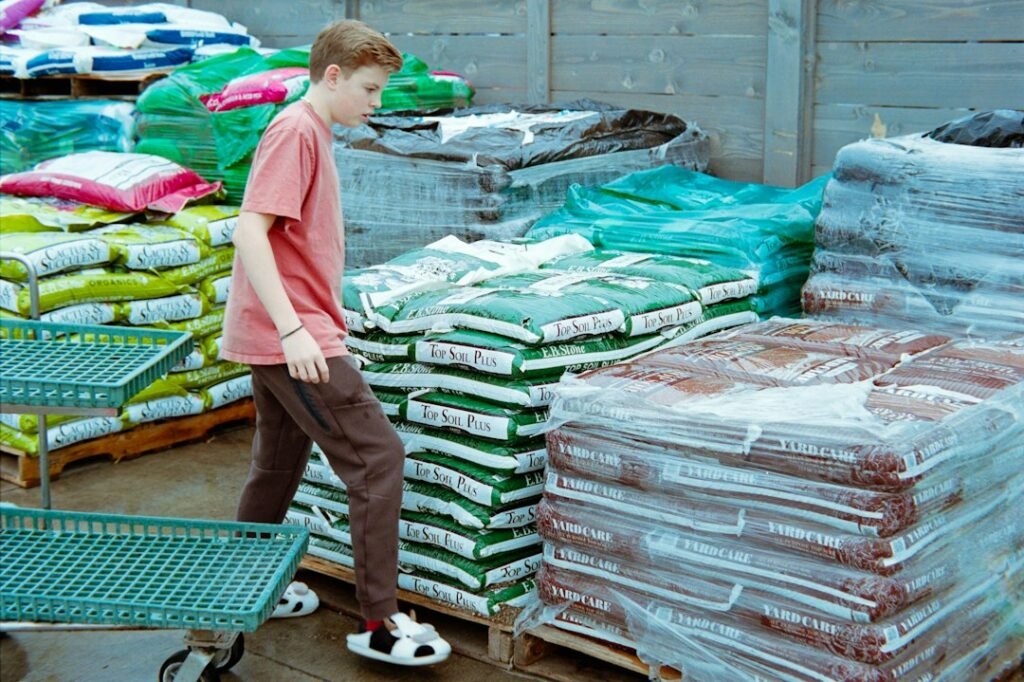
Bagged topsoil is typically sold in 0.75-cubic-foot or 1-cubic-foot plastic bags. Bulk topsoil is delivered loose in the bed of a dump truck and tipped onto your driveway or designated drop zone. Each method has distinct advantages and financial trade-offs.
When to Choose Bagged Soil
Bagged soil is ideal for small projects requiring fewer than 2 to 3 cubic yards of material, such as filling a few planter boxes, patching small lawn holes, or working in backyards with no gate access for heavy machinery.
Advantages include easy transport in the trunk of a standard car, clean storage in your garage without ruining your driveway, and easier manual handling if you cannot lift heavy bulk loads. However, bagged soil costs significantly more per cubic yard—often translating to double or triple the price of bulk dirt when accounting for plastic packaging waste.
When to Choose Bulk Delivery
Bulk topsoil is the undisputed winner for any project exceeding 3 cubic yards. Buying in bulk saves substantial money and eliminates the grueling chore of slicing open dozens of plastic bags.
Advantages include lower per-yard material costs, uniform blending, and faster project execution with a wheelbarrow and shovel or a skid-steer loader. The main drawback is site access: the dump truck requires a clear overhead path free of power lines and tree branches, and a solid driveway or hardpacked pad to prevent the heavy truck from getting stuck in your soft lawn.
Accounting for Waste and Settling Factors
One of the most common mistakes DIY builders make is ordering the exact mathematical amount of topsoil calculated by dimensions. Soils are loose, aerated materials that compress significantly under their own weight, foot traffic, and watering.
Failing to account for settling and site irregularities will leave your garden beds looking half-empty a few weeks after planting. Adding a standard waste and settling buffer ensures your final grade matches your initial design plans perfectly.
Also Read:
- How Much Does Sand Cost in 2026? Prices, Delivery & Calculator
- How Much Does Concrete Cost Per Yard in 2026? Pricing, Delivery & Labor
- How Much Sand Do I Need for Pavers? (2026 Calculator & Estimator)
- Sand Calculator: How Much Sand Do I Need in 2026?
- How Much Does Landscape Rock Cost in 2026? Pricing, Materials, and Delivery
The 10% to 15% Settlement Buffer
When loose topsoil is spread and subjected to rain or irrigation, air pockets collapse, causing the soil level to drop by up to 10% or more. To combat this, you should always multiply your final cubic yardage or cubic footage calculation by 1.10 for a standard buffer, or 1.15 if your soil is particularly loose and fluffy.
If your calculation shows you need exactly 10 cubic yards of topsoil, you should actually order 11 to 11.5 cubic yards. Having a slight excess is much better than running short, as most bulk suppliers charge steep delivery minimums for small top-up orders.
Irregular Shapes and Slopes
Most yards are not perfect rectangles. Circular garden beds, triangular corners, and sloped terrain complicate volume calculations. Breaking complex yards into smaller geometric shapes—such as squares, rectangles, and triangles—allows you to calculate each zone individually before summing the totals.
For sloped terrain, remember that soil tends to wash downhill during heavy rain events before turf roots establish. Steeper grades may require terracing, retaining walls, or erosion control blankets in addition to your topsoil layer.
Common Types of Topsoil and Soil Mixes

Not all topsoil is created equal. Buying cheap fill dirt when you need fertile planting soil will result in stunted plant growth and weed infestations. Understanding soil classifications helps you select the right product for your specific application.
Local landscape suppliers generally categorize soil into screened topsoil, garden mixes, and specialized compost blends. Each serves a unique purpose in residential landscaping and construction.
Screened Topsoil
Screened topsoil has been passed through a mechanical mesh screen to remove large rocks, roots, clumps of clay, and debris. This is the standard choice for general grading, filling holes, and establishing a base layer for sod.
Advantages include a smooth, workable texture that rakes out easily. The trade-off is that basic screened topsoil may lack sufficient organic matter for heavy vegetable gardening, requiring you to mix in compost or fertilizer.
Compost and Organic Blends
Compost-amended topsoil is a rich mixture of topsoil, aged manure, mushroom compost, or leaf mold. It is engineered specifically for flower beds, vegetable gardens, and revitalizing exhausted lawn soil.
Advantages include superior nutrient content, excellent moisture retention, and vibrant biological activity that supports healthy root growth. The main trade-off is higher cost and potential weed seed content if the compost was not properly heat-treated during production.
Step-by-Step Guide to Measuring Your Yard
Accurate measurements are the bedrock of any successful material estimate. Eyeballing yard dimensions almost always leads to costly ordering errors. Taking systematic measurements ensures your topsoil calculator inputs are spot-on.
Gather a long measuring tape, marking flags or stakes, a notepad, and a helper to make the process quick and painless. Taking a few extra minutes to map your yard prevents headaches on delivery day.
- Map your work area. Draw a rough sketch of your lawn or garden beds, dividing irregular zones into distinct rectangular sections.
- Measure length and width. Measure the longest points of each section in feet, rounding up to the nearest half-foot for safety.
- Check soil depth requirements. Insert a metal probe or ruler into the existing dirt at multiple points to determine how much depth you actually need to add.
- Calculate total volume. Multiply length by width by depth in feet, convert to cubic yards, and add your 10% waste buffer.
Hidden and Additional Costs to Anticipate
Budgeting for topsoil involves more than just the sticker price of the dirt itself. Failing to account for ancillary expenses can catch you off guard when the final bill arrives.
Delivery fees are the most common hidden cost. Many suppliers charge a flat delivery fee or a mileage surcharge if you live outside their standard local radius. Additionally, if you cannot shovel and spread the bulk pile yourself, hiring local laborers or landscaping contractors will add substantial hourly or project-based costs.
How to Lower the Cost of Your Topsoil Project
Topsoil expenses can add up quickly on large grading and landscaping renovations. Applying strategic cost-saving measures helps keep your project budget under control.
- Buy in bulk rather than bags. Purchasing cubic yards by the truckload slashes material costs by half or more compared to buying hundreds of plastic bags.
- Source free fill dirt for deep fills. If you need to raise a deep depression by more than a foot, use unamended fill dirt for the bottom 80% and cap the top 3-4 inches with quality topsoil.
- Pick up the material yourself. If you have a heavy-duty truck and trailer, picking up 1 to 2 cubic yards directly from the local yard eliminates delivery fees entirely.
- Share bulk delivery with neighbors. If your supplier’s minimum truckload is larger than your project requires, coordinate with a neighbor who also needs soil to split the delivery fee.
How to Get an Accurate Topsoil Estimate
Securing reliable quotes from local suppliers requires clear, structured information. Gather your measurements, project goals, and site access details before calling around.
Ask suppliers whether their topsoil is screened, what organic amendments are included, whether delivery is curb-drop only or tailgating is permitted, and if there are fuel surcharges. Getting multiple quotes ensures you get fair market pricing for quality material.
Common Topsoil Calculation Mistakes to Avoid
Even with a reliable topsoil calculator, homeowners often make simple calculation errors that result in too much or too little soil on delivery day. Recognizing these pitfalls helps you execute a flawless landscaping project.
One frequent mistake is mixing units of measurement. Multiplying feet by inches without converting inches into decimals (by dividing by 12) yields wildly inaccurate numbers that will completely ruin your yard volume estimates.
Forgetting to Convert Units
If your garden is 10 feet long and 5 feet wide, and you want 6 inches of soil, multiplying 10 x 5 x 6 = 300 is completely wrong. You must convert 6 inches to 0.5 feet first. The correct math is 10 x 5 x 0.5 = 25 cubic feet.
Ignoring Subsoil Compaction
Native soil under lawns and old gardens is often heavily compacted from heavy foot traffic, construction equipment, or natural clay density. If you apply a thin layer of topsoil over compacted ground without loosening the base layer first, water will pool on the surface instead of draining naturally into the root zone.
Advanced Topsoil Planning for Sloped Terrain
Sloped yards present unique geometric challenges when calculating topsoil volume. If you simply measure the flat horizontal surface area of a steep hill, your calculator will underestimate the actual surface area of the slope.
For moderate to steep slopes, the surface area is larger than the footprint on a 2D map. To ensure you do not run short of material on a hill, increase your calculated surface area by 5% to 10% to account for the physical pitch of the terrain.
Managing Erosion During Installation
Once you spread topsoil over a slope, heavy rainfall can easily wash your investment down into your neighbor’s yard or street gutters before grass seed has time to germinate and anchor the soil.
Use jute netting, erosion control blankets, or temporary silt fences on slopes steeper than 3:1. These materials hold the newly graded topsoil in place until deep root systems take over.
Maximizing Soil Health After Delivery
Calculating and spreading the correct amount of topsoil is only half the battle. Maintaining the biological vitality of your new soil layer ensures your plants and turf thrive over the long term.
Test your soil’s pH level a few weeks after installation. Most lawn grasses and vegetables prefer a neutral pH range between 6.0 and 7.0. If your native soil or delivered topsoil is overly acidic, incorporating agricultural lime will balance the pH and unlock vital nutrients.
Watering and Initial Settling Management
Water your newly installed topsoil thoroughly immediately after spreading. This deep watering accelerates natural settling and helps eliminate hidden air pockets. Once the soil settles, fill any minor depressions with a light topdressing before planting your seeds or laying sod.
Frequently Asked Questions
How many bags of topsoil are in a cubic yard?
There are 27 cubic feet in a cubic yard. Since standard bags of topsoil contain 0.75 cubic feet of soil, you will need exactly 36 bags to equal one cubic yard.
How deep should topsoil be for a new lawn?
For a brand-new lawn or sod installation, you should aim for a topsoil depth of 4 to 6 inches over native subsoil to give grass roots adequate room to establish.
Does topsoil settle after you put it down?
Yes, loose topsoil settles significantly after rain and irrigation. You should always add a 10% to 15% waste and settlement buffer to your calculated volume when ordering.
What is the difference between fill dirt and topsoil?
Fill dirt is unrefined subsoil taken from deeper in the earth, often containing rocks and clay, used for deep structural filling. Topsoil is the nutrient-rich topmost layer of soil screened for organic gardening and lawn health.
Can I put topsoil directly over existing grass?
You can add a thin layer of topsoil (up to 0.5 to 1 inch) to topdress and level an existing lawn without killing the grass. Piling 2 or more inches of soil over grass will suffocate and kill it.
How much does a cubic yard of topsoil weigh?
A cubic yard of dry topsoil typically weighs between 2,000 and 2,700 pounds (1 to 1.35 tons). Wet topsoil can weigh significantly more, up to 3,000 pounds per cubic yard.
Final Takeaway
Calculating the right amount of topsoil prevents costly reorders and back-breaking excess waste. By measuring your project area accurately, accounting for proper depth, and factoring in a 10% to 15% settlement buffer, you ensure smooth project execution from start to finish.
- Measure accurately: Multiply length by width by depth in feet to find total cubic volume.
- Choose the right format: Buy in bulk for projects over 3 cubic yards and bagged soil for small touch-ups.
- Factor in settlement: Always add a 10% buffer to account for natural soil compaction.
The biggest cost variables remain material quality, delivery fees, and whether you handle the labor yourself. For a reliable preliminary estimate, use our Soil Cost Calculator and Landscaping Cost Calculator alongside local supplier quotes before purchasing.
Estimates vary by location, supplier and site conditions and should be verified locally.