Introduction to Hardscape Budgeting
You are planning a new outdoor living space or driveway, and you need to figure out what your budget will actually buy. Between materials, excavation, base aggregates, and labor, hardscaping numbers can quickly become confusing. So, how much does a paver project cost in 2026?
A professional paver installation typically costs between $12 and $25 per square foot installed for standard concrete pavers, with a national average of around $15 to $18 per square foot. For a standard 400-square-foot patio, total project costs generally range from $5,000 to $10,000. Premium materials like natural stone or permeable pavers can easily push prices above $30 per square foot.
Understanding these figures requires breaking down how project size, material choice, and site preparation drive the final bill. This guide will walk you through precise pricing breakdowns, cost calculators, and money-saving strategies.
How Much Do Pavers Cost in 2026?

When planning your budget, viewing costs by square foot provides a reliable baseline for comparison. A standard project includes excavation, sub-base gravel, bedding sand, edge restraints, pavers, and joint sand compaction. You can use our Paver Cost Calculator to estimate your exact project requirements based on local labor rates and specific dimensions.
| Project Size | Estimated Cost Range | Average Cost per Sq. Ft. |
|---|---|---|
| 200 sq. ft. (Small Walkway / Pad) | $2,400 – $4,500 | $12 – $22.50 |
| 400 sq. ft. (Medium Patio) | $4,800 – $10,000 | $12 – $25.00 |
| 600 sq. ft. (Large Patio & Fire Pit) | $7,200 – $16,500 | $12 – $27.50 |
| 800 sq. ft. (Standard Driveway) | $10,400 – $24,000 | $13 – $30.00 |
| 1,200 sq. ft. (Large Driveway) | $15,600 – $38,400 | $13 – $32.00 |
Estimated Paver Project Cost by Size
Chart note: The chart illustrates estimated total project cost ranges for professional installation across various square footages, varying by materials and site conditions.
Keep in mind that these figures represent planning estimates rather than guaranteed contractor quotes. Factors such as soil conditions, regional labor rates, and custom borders will push your total toward the low or high end of these ranges.
Cost per Square Foot and Unit Pricing Breakdown
Unit pricing serves primarily as a comparative tool rather than a final billing method. Contractors quote projects based on total scope, but understanding the per-square-foot math helps you audit estimates. For instance, a 500-square-foot patio at an average installed rate of $16 per square foot calculates as: 500 x $16 = $8,000.
When reviewing contractor proposals, never assume everything is included. Ask specifically whether the quote includes:
- Demolition and hauling away of existing concrete or turf
- Permit acquisition and utility marking
- Sub-base excavation depth (minimum 4 to 6 inches for patios, 8 to 12 inches for driveways)
- Geotextile fabric installation
- Edge restraint staking and joint stabilization
Using a dedicated Paver Installation Cost Calculator helps verify that your contractor is accounting for every layer of the assembly correctly.
Cost by Paver Material Type

The material you select dictates a large portion of your total investment. Different materials carry distinct aesthetic values, durability ratings, and installation challenges.
Concrete Pavers
Concrete pavers are the most popular choice for patios, walkways, and driveways due to their balance of affordability and versatility. They come in dozens of shapes, colors, and textures to mimic natural stone or brick.
- Extremely versatile with uniform dimensions for easy installation
- Available in standard, tumbled, and interlocking styles
- Prone to fading over many years without proper sealing
Typical installed cost ranges from $12 to $22 per square foot.
Try Our Free Calculators:
Brick Pavers
Traditional clay brick pavers offer a timeless, historic look that never fades because the color runs entirely through the natural fired clay.
- Color remains vibrant and UV-resistant for decades
- Provides a classic, rustic architectural aesthetic
- Slightly more prone to chipping during installation than concrete
Typical installed cost ranges from $15 to $28 per square foot.
Natural Stone Pavers
Natural stone options—including flagstone, bluestone, travertine, and slate—deliver unmatched luxury and organic beauty to high-end outdoor spaces.
- Incredible aesthetic appeal and high property value return
- Extremely durable against extreme freeze-thaw cycles
- Higher material costs and labor-intensive irregular shapes
Typical installed cost ranges from $20 to $40+ per square foot.
Permeable Pavers
Permeable pavers feature wider joints filled with clear crushed aggregate, allowing stormwater to drain directly into the sub-base instead of running off into municipal systems.
- Eco-friendly solution often required by local stormwater codes
- Reduces pooling and eliminates surface puddles
- Requires specialized open-graded base rock installation
Typical installed cost ranges from $18 to $30 per square foot.
| Material | Typical Cost Level | Maintenance | Key Considerations |
|---|---|---|---|
| Concrete Pavers | Moderate ($12-$22/sq ft) | Low (Seal every 3-5 yrs) | Most versatile; wide style variety |
| Brick Pavers | Moderate to High ($15-$28/sq ft) | Low (Sweep and wash) | Color never fades; classic appearance |
| Natural Stone | High ($20-$40+/sq ft) | Low to Moderate | Irregular cuts require skilled labor |
| Permeable Pavers | High ($18-$30/sq ft) | Moderate (Re-fill joints) | Meets strict stormwater runoff regulations |
What Makes Up the Total Cost of a Paver Project?
Several distinct phases contribute to your project total. Labor and site preparation usually consume 60% to 70% of the total budget, while materials account for the remaining 30% to 40%.
Site Preparation and Excavation
Before any stone is laid, crews must dig out the earth to accommodate the sub-base. Patios require digging down 6 to 8 inches, while driveways need 12 to 14 inches of depth. Soil hauling, renting dumpsters, and operating skid steers all add to this phase.
Sub-Base and Bedding Aggregates
The foundation determines whether your pavers stay level or develop dips and dips over time. A crushed aggregate base (such as dense-grade aggregate or item #4) is laid in lifts and compacted with a heavy plate compactor. A 1-inch layer of concrete sand or fine limestone screening forms the final bedding layer.
Laying, Cutting, and Compacting
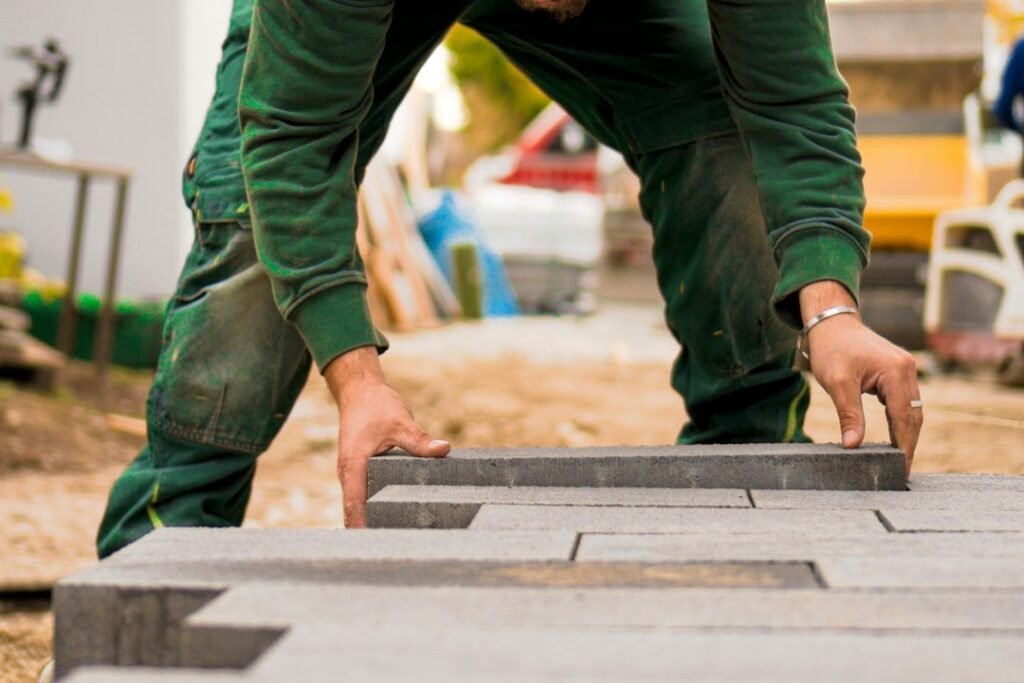
Placing pavers requires precision, especially when cutting pieces around curves, posts, or corners using a wet saw or masonry guillotine. Once laid, a final pass with a plate compactor embeds the pavers firmly into the sand bed before polymeric joint sand is swept and watered in.
Labor Costs and Installation Factors
Also Read:
Labor rates vary widely based on your geographic location, local cost of living, and contractor experience. In major metropolitan areas with high demand, professional masonry crews charge $8 to $15 per square foot just for labor. For specialized projects like a Paver Driveway Cost Calculator estimate, you must account for thicker aggregate bases and heavier vehicular-rated 80mm pavers.
Complex patterns like herringbone, running bond with multiple sizes, or circular medallions require more cuts, higher waste factors, and extra time, which increases labor fees.
Illustrative Cost Scenario
Consider an illustrative 500-square-foot backyard patio using mid-range concrete pavers in a standard running bond pattern with a simple border.
| Cost Component | Estimated Share | Cost Amount |
|---|---|---|
| Excavation & Disposal | 15% | $1,200 |
| Base Aggregates & Sand | 20% | $1,600 |
| Paver Materials (500 sq ft + 10% waste) | 30% | $2,400 |
| Labor & Installation | 35% | $2,800 |
| Total Estimated Project Cost | 100% | $8,000 |
Homeowners tackling projects with unique grade changes or retaining walls can plan site leveling quantities using our Paver Base Calculator to avoid ordering short.
Hidden or Additional Costs to Watch Out For
Surprise expenses can derail your hardscaping budget if you do not plan for them ahead of time. Always keep a 10% to 15% contingency fund.
- Drainage systems: Installing French drains, channel drains, or catch basins to route water away from foundations adds $500 to $2,000.
- Permits and engineering: Local municipalities often require hardscape permits for projects exceeding certain square footages or near property lines, costing $100 to $500.
- Utility locating: Calling 811 is free, but if private utility lines (like irrigation or gas lines to a grill) need mapping, private locating services cost $300 to $600.
- Steps and retaining walls: Integrating raised patios or staircases introduces significant block and labor expenses.
Common Mistakes to Avoid
Hardscaping requires strict adherence to industry installation standards to prevent premature failure.
- Skipping compaction: Failing to compact the sub-soil and aggregate base in thin lifts leads to severe settling and uneven pavers within the first year.
- Ignoring slope: Patios and driveways must slope away from your home’s foundation at a minimum rate of 1/8 inch to 1/4 inch per foot to prevent basement flooding.
- Ordering too little material: Forgetting to add a 10% waste factor for cuts and breakage leaves you scrambling to match dye lots mid-project.
- Skimping on edge restraints: Without heavy-duty plastic or aluminum edge restraints anchored by 10-inch spikes, your perimeter pavers will migrate outward over time.
How to Lower the Cost of Your Paver Project

If professional quotes come in higher than your target budget, several smart strategies can trim expenses without sacrificing structural integrity.
- Keep the shape simple. Rectangular layouts require far fewer cuts and generate less waste than intricate curves and multi-tier circles.
- Handle the demolition yourself. Renting a dumpster and tearing out old sod, concrete slabs, or timber edging saves substantial labor hours on the front end.
- Choose standard shapes. Simple 4×8 brick pavers or standard 6×9 rectangular pavers are usually much cheaper to purchase than large-format modular slab systems.
- Get multiple quotes. Solicit at least three detailed bids from licensed, insured local hardscape contractors to compare material markups and labor fees.
How to Get an Accurate Estimate
Gathering precise specifications before talking to contractors ensures your bids are accurate and apples-to-apples. Measure your total area in square feet, note any slopes or drainage issues, and take photos of access points to your backyard. If you prefer to calculate exact material quantities for ordering blocks, sand, and gravel yourself, our Paver Quantity Calculator streamlines the math before you visit the stone yard.
Understanding Sub-Grade Conditions and Soil Mechanics
Before any excavation takes place, the underlying soil composition dictates the engineering requirements of your hardscape assembly. Clay soils retain moisture and expand or contract heavily during freeze-thaw cycles, requiring a deeper sub-base and stabilization fabrics to prevent shifting. Conversely, sandy soils offer better natural drainage but may require more extensive compaction to achieve a stable sub-grade.
When evaluating a contractor’s estimate, pay close attention to the site inspection notes. If your property features heavy clay or uncompacted fill dirt, expect to pay an additional $1,000 to $3,000 for soil stabilization, lime treatment, or hauling in extra crushed rock to build a structurally sound foundation that will last for decades.
Detailed Breakdown of Base Aggregates
The longevity of a paver patio or driveway depends entirely on layers unseen from the surface. A standard residential patio requires a minimum of 4 to 6 inches of compacted dense-graded aggregate (crushed stone base, typically graded from 3/4-inch down to dust). For driveways that must support heavy vehicle loads, this base depth must increase to 8 to 12 inches.
Ordering these materials requires calculating volume in cubic yards rather than square footage. To find cubic yards, multiply your total square footage by the depth in feet, then divide by 27. For example, a 500-square-foot patio requiring a 6-inch (0.5 ft) base needs 250 cubic feet, which equals approximately 9.25 cubic yards of base material. Always order an extra 10% to account for compaction and irregular sub-grade depths.
Polymeric Sand Versus Traditional Sand
Choosing the right joint sand is crucial for protecting your investment against weed growth, insect infestation, and paver shifting. Traditional joint sand is simply fine, dry masonry sand swept into the joints. While inexpensive upfront, it washes out easily during heavy rains, requires frequent sweeping, and encourages weed seeds to germinate.
Polymeric sand, on the other hand, is a specialized blend of graded sand and polymeric additives that bind together when activated with water. Once cured, it forms a flexible, semi-solid seal that resists weed growth, prevents ant hills, and locks individual pavers in place. Although polymeric sand costs significantly more per bag, it drastically reduces long-term maintenance labor and keeps hardscapes looking pristine.
Long-Term Maintenance and Sealing Budgets
Many homeowners overlook the ongoing maintenance costs associated with paver surfaces. While concrete and brick pavers are exceptionally durable, routine upkeep ensures they retain their original aesthetic appeal. Budgeting for annual cleaning, occasional re-sanding of high-traffic joints, and sealing every three to five years will protect your capital investment.
Professional paver sealing typically costs between $1.50 and $3.00 per square foot, including pressure washing, joint touch-ups, and the application of a penetrating or film-forming sealer. Sealing enhances color richness, protects against oil stains on driveways, and inhibits efflorescence—the natural white powdery salt residue that occasionally leaches out of curing concrete.
DIY Installation vs. Hiring a Professional
Deciding whether to tackle a paver installation yourself or hire a licensed contractor involves weighing labor intensity against financial savings. A DIY approach can cut quoted labor costs by 50% or more, saving thousands of dollars on a medium-sized patio. However, professional hardscaping requires heavy equipment rentals, precise laser-leveling skills, and significant physical endurance.
Renting a plate compactor, wet masonry saw, bobcat skid steer, and demolition dumpsters can easily total $500 to $1,500 in equipment fees alone. Furthermore, professional installation crews complete projects in a fraction of the time, often finishing a 500-square-foot patio in three to five days, whereas a weekend warrior DIY project frequently stretches across multiple weeks.
Regional Variations in Hardscape Pricing
Geographic location is one of the most volatile variables influencing paver installation costs. Labor rates, local disposal fees, quarry proximity, and regional climate requirements create wide cost discrepancies across North America.
In regions with harsh winters and deep frost lines, contractors must excavate deeper and utilize specialized open-graded base systems to mitigate freeze-thaw heaving. Conversely, warmer southern climates require less excavation depth but may demand specialized UV-stable sealants to combat intense sun exposure. Metropolitan areas with higher living costs will naturally reflect higher labor rates, often pushing installed prices 20% to 35% above national averages.
Evaluating Contractor Bids and Credentials
When collecting estimates from hardscape professionals, receiving multiple bids ensures competitive pricing, but the lowest bid is rarely the best choice. Always verify that bidding contractors hold valid licenses, general liability insurance, and workers’ compensation coverage to protect your property and liability.
Ask potential contractors for references from recent projects, and request proof of certification from recognized industry organizations such as the Interlocking Concrete Pavement Institute (ICPI). An ICPI-certified installer has undergone rigorous training in structural soil mechanics, edge restraint engineering, and drainage compliance, giving you peace of mind that your hardscape investment is built to industry best standards.
Frequently Asked Questions
Are pavers more expensive than poured concrete?
Yes, professional paver installations generally cost 20% to 50% more upfront than standard poured concrete slabs. However, pavers offer superior crack resistance, easier spot repairs, and significantly higher aesthetic appeal.
How long does a professional paver installation take?
Most standard residential patios or walkways take between 3 to 5 days from excavation to final joint compaction. Larger driveways or complex multi-tier hardscapes with retaining walls can take 1 to 2 weeks.
Do I need a permit to install a paver patio?
Permit requirements vary by local building jurisdiction. Patios that sit at grade and do not alter major property drainage often do not require permits, but raised patios, large driveways, or structures near property lines frequently do.
How do I prevent weeds from growing between pavers?
Using high-quality polymeric joint sand during installation is the best defense against weeds. The polymers bind the sand particles together when activated with water, creating a hard barrier that resists weed seeds and ant hills.
Can I install pavers myself to save money?
DIY paver installation is entirely feasible for small patios and walkways if you own or rent a plate compactor and have patience for excavation. However, driveways and large projects require heavy equipment and precise grading best left to professionals.
How often do pavers need to be sealed?
Concrete pavers generally benefit from being sealed every 3 to 5 years to protect against UV fading, oil stains, and moisture penetration. Natural stone may require specialized sealers depending on its porosity.
Final Takeaway
Installing pavers transforms outdoor living spaces and adds lasting curb appeal to your property, but budgeting accurately requires accounting for heavy excavation, sub-base materials, and skilled labor.
- Standard professional paver installations average $12 to $25 per square foot.
- Material choice ranges from economical concrete pavers to premium natural stone.
- Site prep, excavation, and aggregate bases account for the majority of the structural budget.
Before committing to a contractor, use BuildCost.online’s Paver Cost Calculator and Paver Installation Cost Calculator to establish a reliable baseline budget for your specific project dimensions.
Estimates vary by location, supplier, and site conditions and should be verified locally.